
Search Results for:
How to Stop Overtrading: Signs, Hidden Costs and a Practical Trade-Limit System
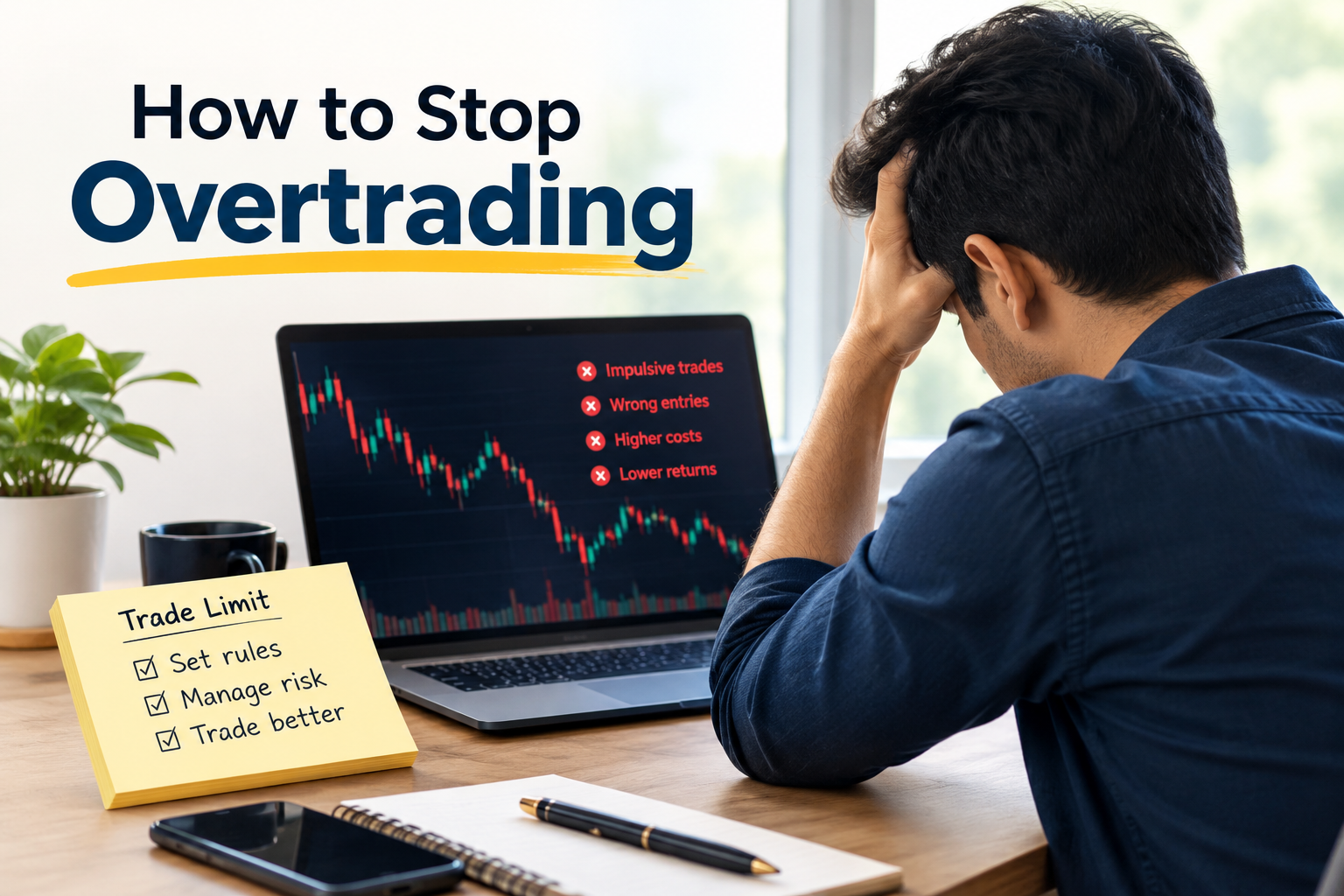
Quick answer Overtrading is not defined by a universal number of trades. It occurs when trade frequency, position size or repeated entries exceed the rules and opportunities supported by your plan. To stop it, define valid setups, cap daily risk and trade count, use a post-loss cooldown, and review the cost of all rule-breaking trades … Read more
Trading Psychology for Indian Traders: A Practical System to Control Fear, FOMO and Revenge Trading

Direct answer Trading psychology is the way your emotions, habits and cognitive biases influence decisions before, during and after a trade. It does not replace a tested strategy. Its practical purpose is to help you follow your entry, risk, exit and review rules when fear, FOMO, overconfidence or the urge to recover a loss makes … Read more
Why Is My DP Charge Missing From the Contract Note but Showing in the Funds Ledger?
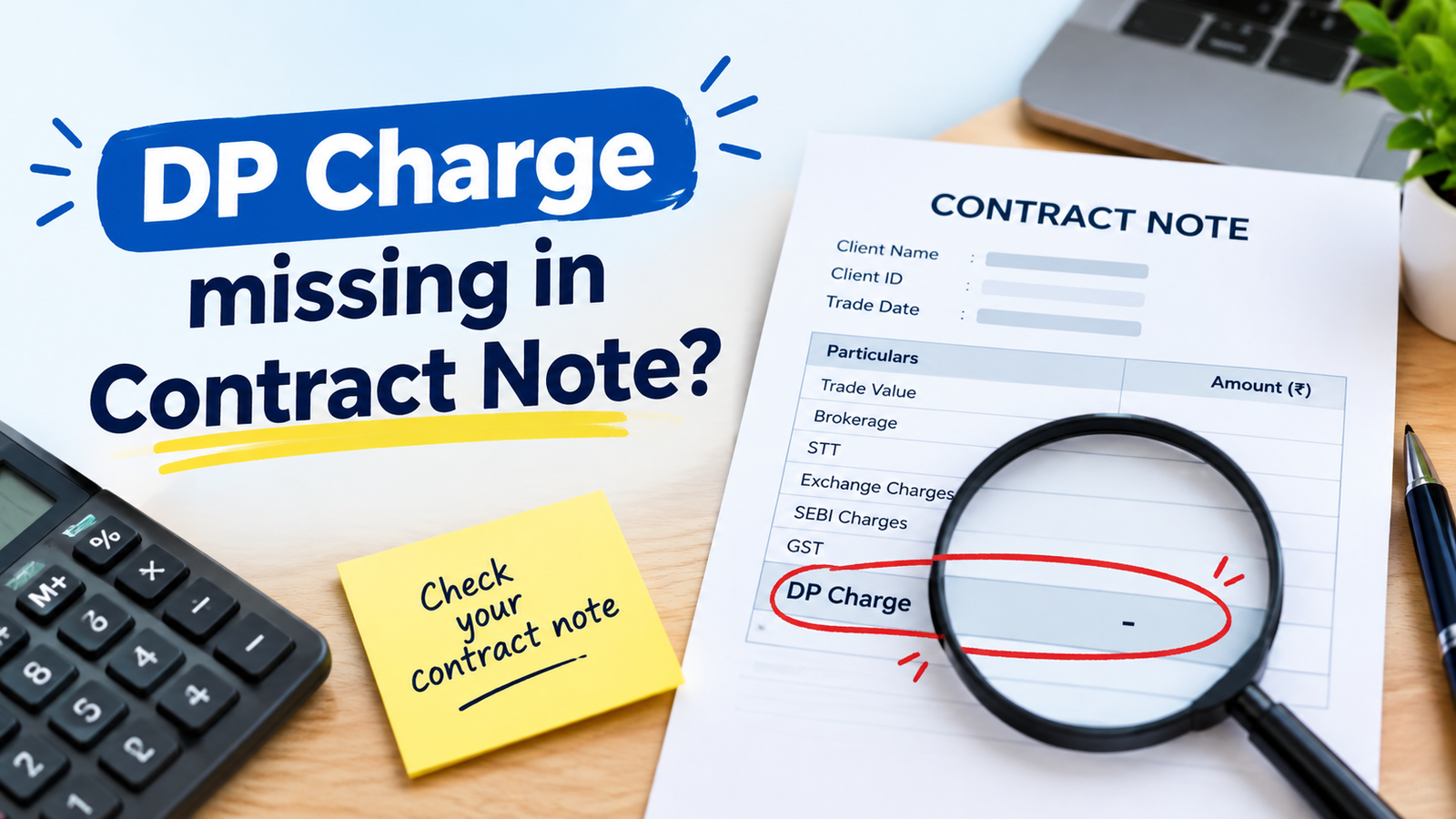
You sell shares, open the contract note, and check every line: brokerage, STT, exchange charges, GST and stamp duty. The sale went through. The charges are there. Yet the DP charge you expected is nowhere on the document. That does not automatically mean the broker missed it. In most cases, the answer is simpler: a … Read more
A Beginner’s Pre-Trade Checklist: Market, Sector, Stock, Entry, Stop and Size
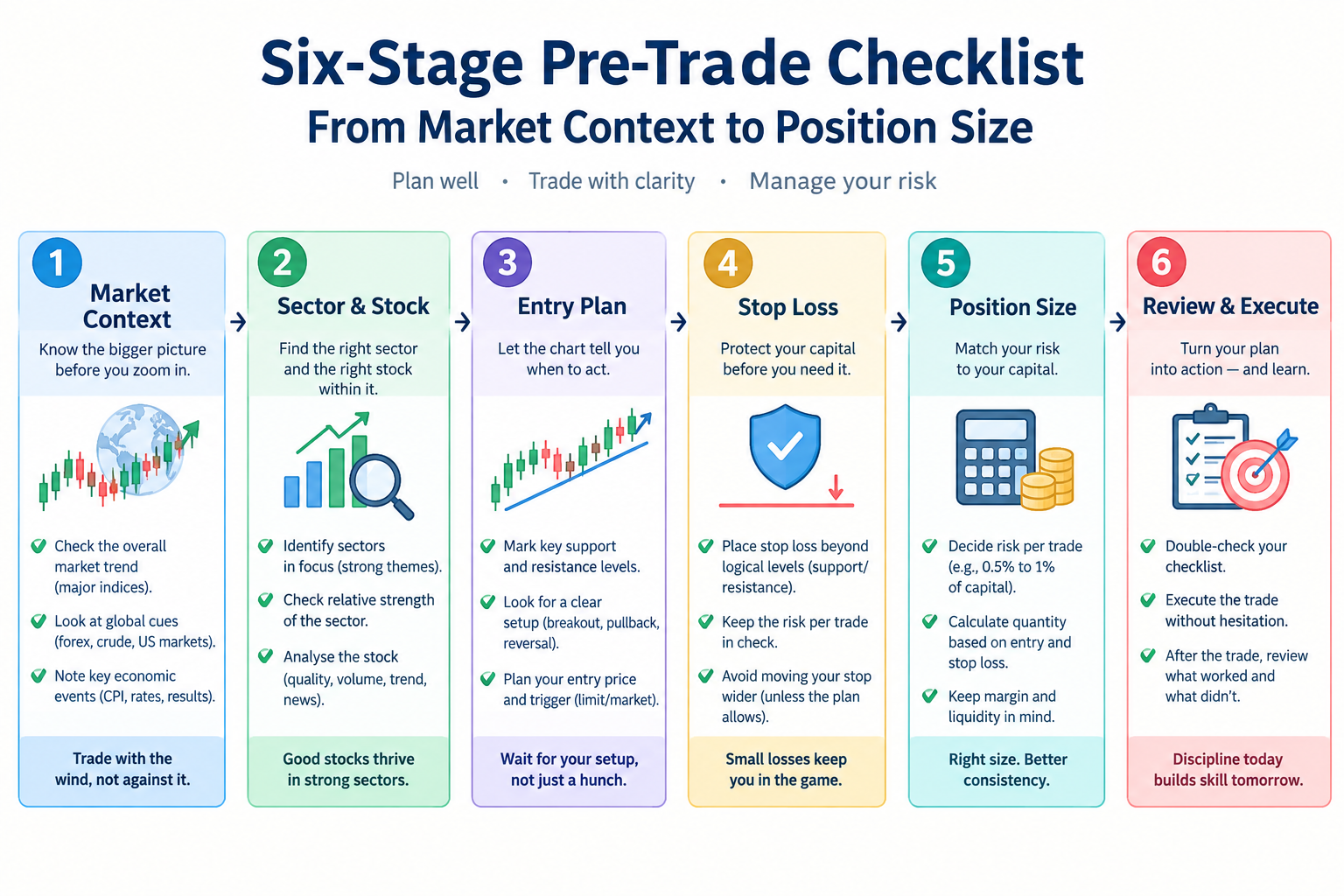
A chart can look attractive and still be a poor trade. The broader market may be weak, the sector may be underperforming, the stock may be illiquid, or the stop-loss may require more risk than your account can reasonably take. This guide turns that sequence into a repeatable beginner-friendly process. It does not predict whether … Read more
Trading Expectancy Explained: Can a 40% Win-Rate Strategy Still Make Money?
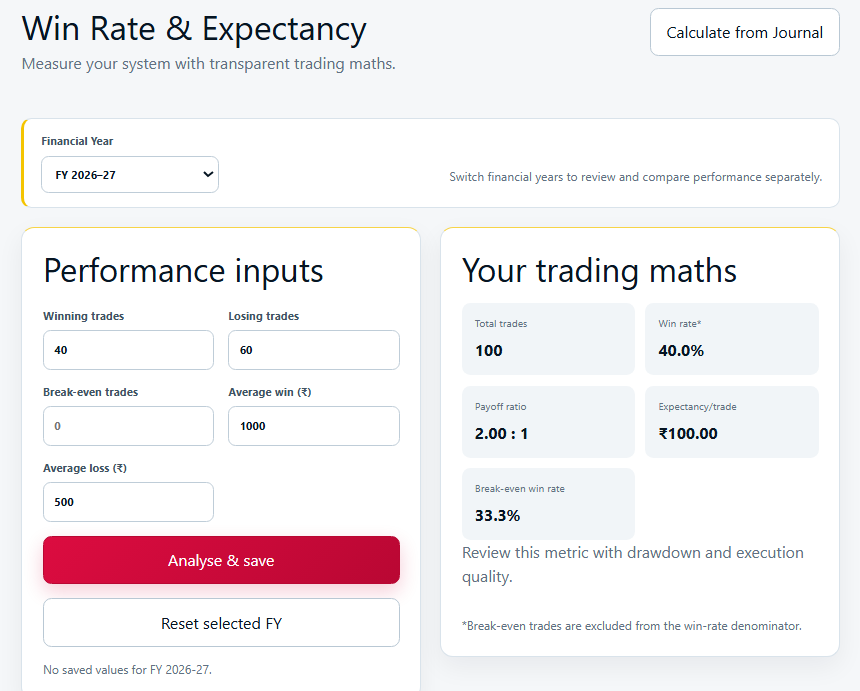
A strategy loses six out of every ten trades. At first glance, that sounds like a poor strategy. But win rate tells you only how often a strategy wins. It does not tell you how much it makes when it wins or loses when it fails. Yes, a strategy with a 40% win rate can … Read more
1:2 Risk-Reward Ratio: What Win Rate Do You Need?

Quick answer A consistent 1:2 risk-reward strategy needs a 33.33% win rate to break even before costs. It must win more than one out of every three trades for positive gross expectancy. After brokerage, statutory charges, spread and slippage, the required win rate will be higher. In a hypothetical sample of 100 trades with identical … Read more