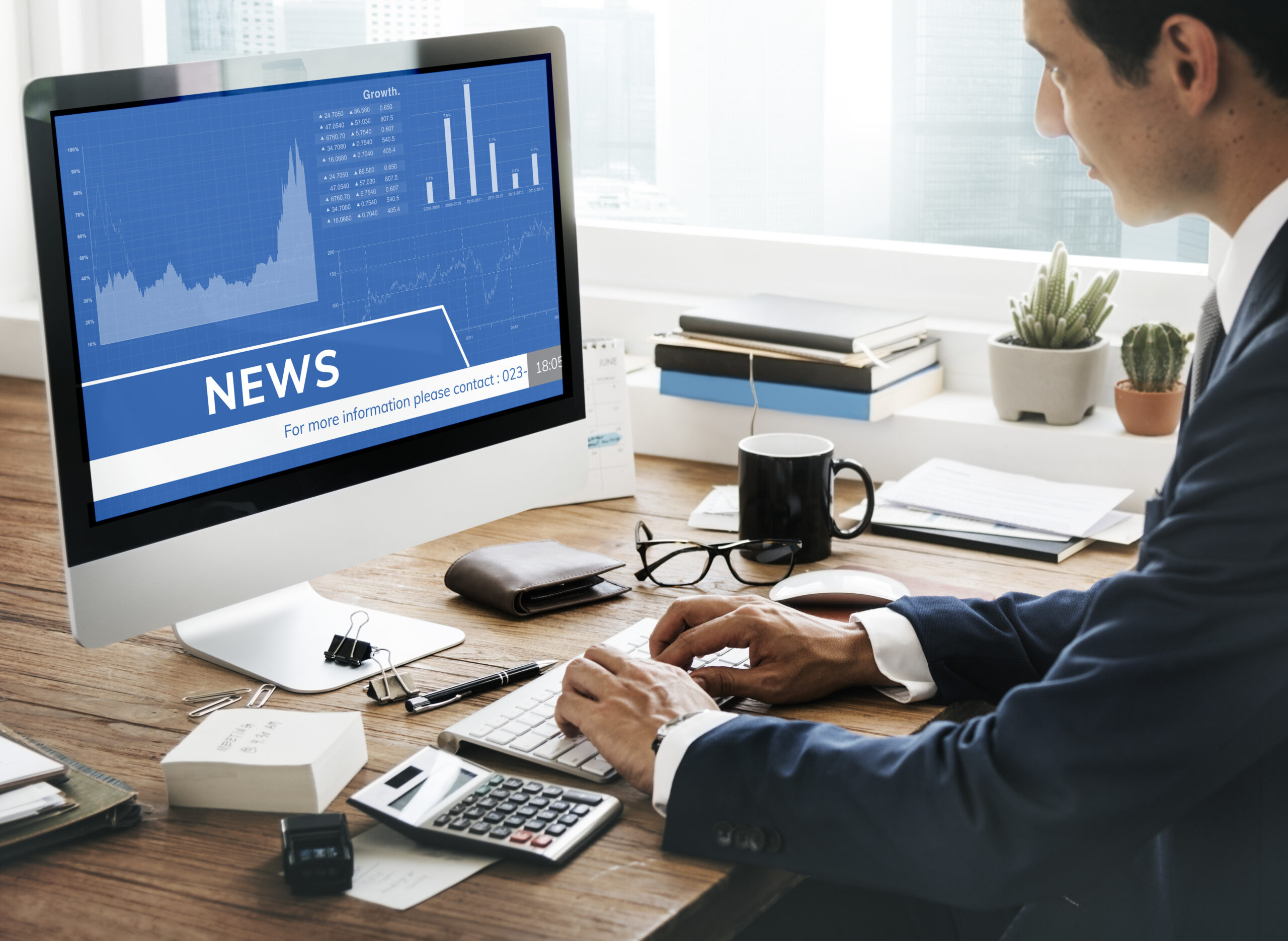
Trading on News sounds exciting. A big announcement hits the screen. Prices jump fast. You feel like money is moving right in front of you.
But here’s the surprising truth:
Most traders lose money not because the news was wrong, but because their reaction was. This single mistake explains why news trading feels so tempting—and so costly.
If you’ve ever chased a candle after a news release, this will feel familiar. Let’s break down what really happens when you trade the news—and how to approach it with clarity instead of chaos.
According to broker disclosures across major forex and CFD platforms, 70–90% of retail traders lose money, with losses increasing during high-volatility events like CPI, FOMC, or earnings releases.
Table of Contents
Why Trading on News Feels So Powerful
News moves markets because it changes expectations.
Interest rates, earnings, inflation data, or policy decisions can shift how people see the future.
That sudden shift creates volatility. And volatility looks like opportunity.
You may see:
Naturally, your brain connects speed with profit. However, speed also magnifies mistakes. That’s why trading on news feels powerful but dangerous at the same time.
Also Read: Gift Nifty
The Four Types of News That Move Markets
Not all news creates the same reaction. Some events shake the market more than others.
Corporate Earnings
Earnings reports often cause sharp moves in individual stocks.
Prices react not just to profit numbers, but to:
- Revenue growth
- Guidance
- Management tone
Sometimes, a company posts good numbers and still falls. That happens because expectations were higher.
For example, a stock may report strong earnings but fall sharply because future guidance disappointed the market.
Also Read: Nifty Expiry
Economic Data Releases
Also Read: Sector Rotation
Central Bank Announcements
Also Read: Fundamental Analysis
Government and Policy News
Also Read: Trendline
What Most Traders Get Wrong When Trading on News
Also Read: Commodity Trading
The Psychology Behind News Trading
News trading tests your mindset more than your charts.
You may feel:
Your brain wants quick rewards. Markets punish emotional speed.
This is the same emotional loop that causes overtrading and revenge trading, especially after fast losses. Professional traders stay calm because they plan before the news, not during it.
Also Read: Breakout
Trading on News vs Normal Market Conditions
Trading on News feels very different from normal trading days. On regular days, price respects levels. Moves feel smoother and more predictable.
During news:
This matters because strategies that work on calm days often fail during news. For example, a clean support level may hold for days. Yet during news, price may slice through it in seconds. That doesn’t mean your strategy is wrong. It means market conditions have changed.
Smart traders adjust expectations when trading on news. They reduce position size, widen stops, or stay out completely.
Once you understand this contrast, you stop blaming yourself. You start reading the market for what it is, not what you want.
This emotional pressure becomes even clearer when you compare news days with normal market conditions.
Also Read: Backtesting
Hidden Risks No One Talks About
Most blogs mention volatility. Few explain what actually hurts traders.
What Happens During Major News Events
Many retail traders enter late due to FOMO, get poor fills because of slippage, and are stopped out when volatility spikes both ways.
Meanwhile, institutions often trade before or after the release, not during the chaos, focusing on liquidity and positioning rather than prediction.
For example, during the U.S. CPI release in June 2022, markets initially spiked bullish within seconds—only to reverse sharply minutes later as traders reassessed inflation expectations and rate path implications. This is why many retail traders get trapped during major releases.
Also Read: Hedging
Spread Widening
Right after news, brokers often widen spreads. Your trade starts in loss instantly
Also Read: ETFs
Slippage
Also Read: How to Open a New Trading Account
False Breakouts
Price breaks a level, pulls traders in, then reverses hard. Algorithms love these traps.
Stop-Loss Hunting
Stops cluster around obvious levels. News spikes often target those zones first.
Also Read: Triangle Chart Pattern
Beginner vs Professional: A Reality Check
Let’s be honest.
Professionals don’t rush. They let the market show direction.
This isn’t about intelligence—it’s about access. Institutions trade news with speed, liquidity, and infrastructure. Retail traders trade it with delay and emotion.
Scalping in fast markets requires ultra-fast execution, tight spreads, and zero hesitation—conditions most retail traders don’t have.
Swing traders, however, often avoid the news spike and instead trade the post-news structure, when volatility settles and price direction becomes clearer.
Also Read: Forward Testing
When Trading on News Makes Sense for Retail Traders
News trading can work—but only in specific conditions.
You may consider it when:
Many traders use price action, support and resistance, or market structure after the initial chaos settles—because retail traders often perform better by avoiding the first spike and trading post-news structure.
Also Read: NiftyBees
When You Should Avoid Trading on News
Also Read: Pledge
How Experienced Traders Prepare Before Trading on News
Experienced traders don’t wait for headlines to react. They prepare hours or even days earlier.
Before trading on news, they:
- Mark key levels
- Note market expectations
- Plan multiple outcomes
Instead of guessing direction, they ask,
“What will I do if price spikes up?”
“What if it reverses?”
This preparation removes panic. When news hits, they don’t rush. They watch how price behaves around key zones. Many times, they don’t trade at all. Patience becomes their edge.
If you want consistency, preparation matters more than prediction. That’s one of the biggest lessons trading on news teaches you.
Also Read: 11 Crypto Insights
Trading on News: Short-Term vs Long-Term Impact
News creates two phases:
- Immediate reaction
- Later interpretation
The first move is often emotional. The second move reflects logic. Many successful traders wait for phase two.
This approach fits well with intraday trading strategies and swing trading setups.
Also Read: MTF
A Simple Decision Framework
Before trading on news, ask yourself:
- Do I understand market expectations?
- Is my risk clearly defined?
- Can I accept fast loss without stress?
- Am I reacting or executing?
If any answer feels shaky, step back.
Also Read: Bollinger Band
Common News Trading Myths
Let’s clear some illusions.
Markets don’t reward speed. They reward discipline.
Also Read: Golden Crossover
So, Is Trading on News Actually Good?
Here’s the honest answer. Trading on news is not good or bad by itself.
Your approach makes the difference.
Without preparation, it becomes gambling. With structure, patience, and risk control, it becomes a tool.
Most traders fail because they treat news like a shortcut. There are no shortcuts in trading.
This aligns with broker disclosures showing consistent retail underperformance during news-driven volatility.
On the other hand, institutional traders have faster data access, better liquidity, and algorithmic execution, giving them a structural edge that retail traders simply don’t have during news-driven moves.
Also Read: How to Know The Best Strike Price in Options
FAQs
Is trading on news good for beginners?
Usually no. Beginners struggle with speed and emotions during news events.
Can you make consistent profits trading news?
Should you trade before or after news?
Most retail traders perform better after volatility stabilizes and spreads normalize.
Which market is best for news trading?
Highly liquid markets like indices and major forex pairs handle news better.
Also Read: Fibonacci Retracement
Why Trading on News Is Not as Profitable as It Looks
News trading looks attractive because of large candles and fast moves, but most of that move is already priced in before retail traders can react.
By the time news reaches retail screens, most of the directional move has already occurred.
Or worse—it’s about to reverse. This is why news trading feels exciting—but often delivers inconsistent results over time.
Also Read: Circuit Limit
Final Thoughts
Trading on News looks thrilling from the outside. From the inside, it demands calm, planning, and honesty with yourself. If you slow down, study reactions, and respect risk, news can become a guide instead of a trap.
Sometimes, the smartest move isn’t clicking faster.
It’s waiting longer.
Markets reward preparation—not opinions, speed, or headlines.
If you’re learning to trade with clarity and structure, you’re already ahead of most. If this helped you rethink news trading, revisit it before your next major event.
This article is educational, not a promise of profit.
Also Read: How to Open a Demat Account