How to Recover After a Trading Loss: A Realistic Reset Without Revenge Trading

Trading Loss

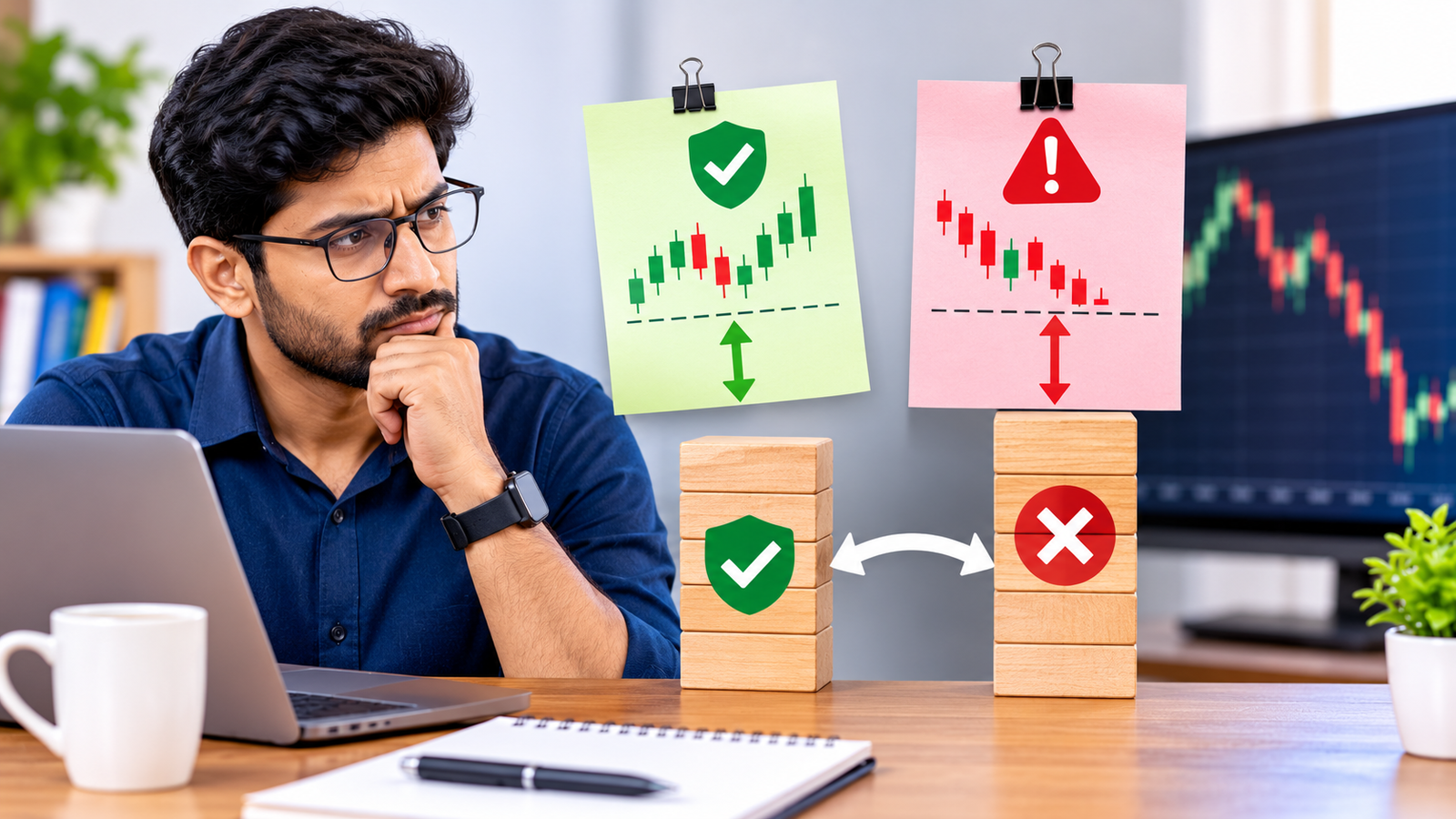
A trading loss does not need an immediate winning trade. It needs a correct diagnosis. First, stop placing new orders long enough to verify open positions, quantify the damage, and write down what happened. Then decide whether the loss was a normal outcome of a valid setup, an execution mistake, excessive risk, or an operational … Read more
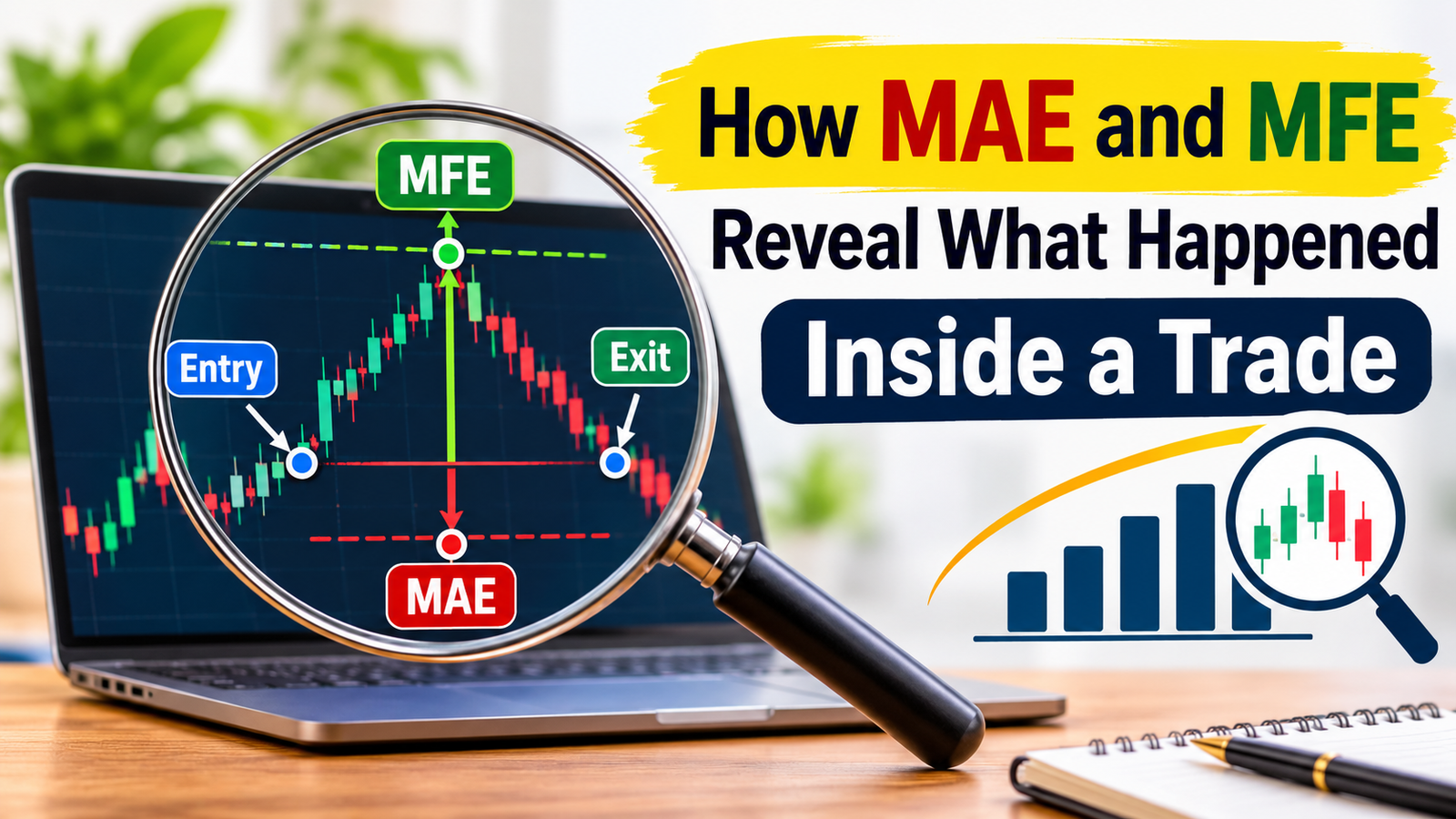
Consecutive Losses in Trading: Normal Variance or a Broken Process?

Consecutive Losses in Trading

Three or five losing trades in a row can make a trader question the strategy, the market, and personal ability at the same time. The streak may be ordinary variation in a valid method. It may also expose poor execution, excessive size, clustered setups, changed market conditions, or a strategy that was never tested properly. … Read more

Planned Risk vs. Actual Loss: Measure the Gap Before It Damages Your Account

Planned Risk vs. Actual Loss

You planned to risk Rs. 500. The stop was triggered, yet the broker statement shows a Rs. 602 loss. The position-size formula was not necessarily wrong. The final result may include a different entry fill, a worse exit fill, a price gap, multiple partial fills, charges, or a decision to move the stop. Planned risk … Read more

Portfolio Heat in Trading: How to Measure Total Open Risk

portfolio heat

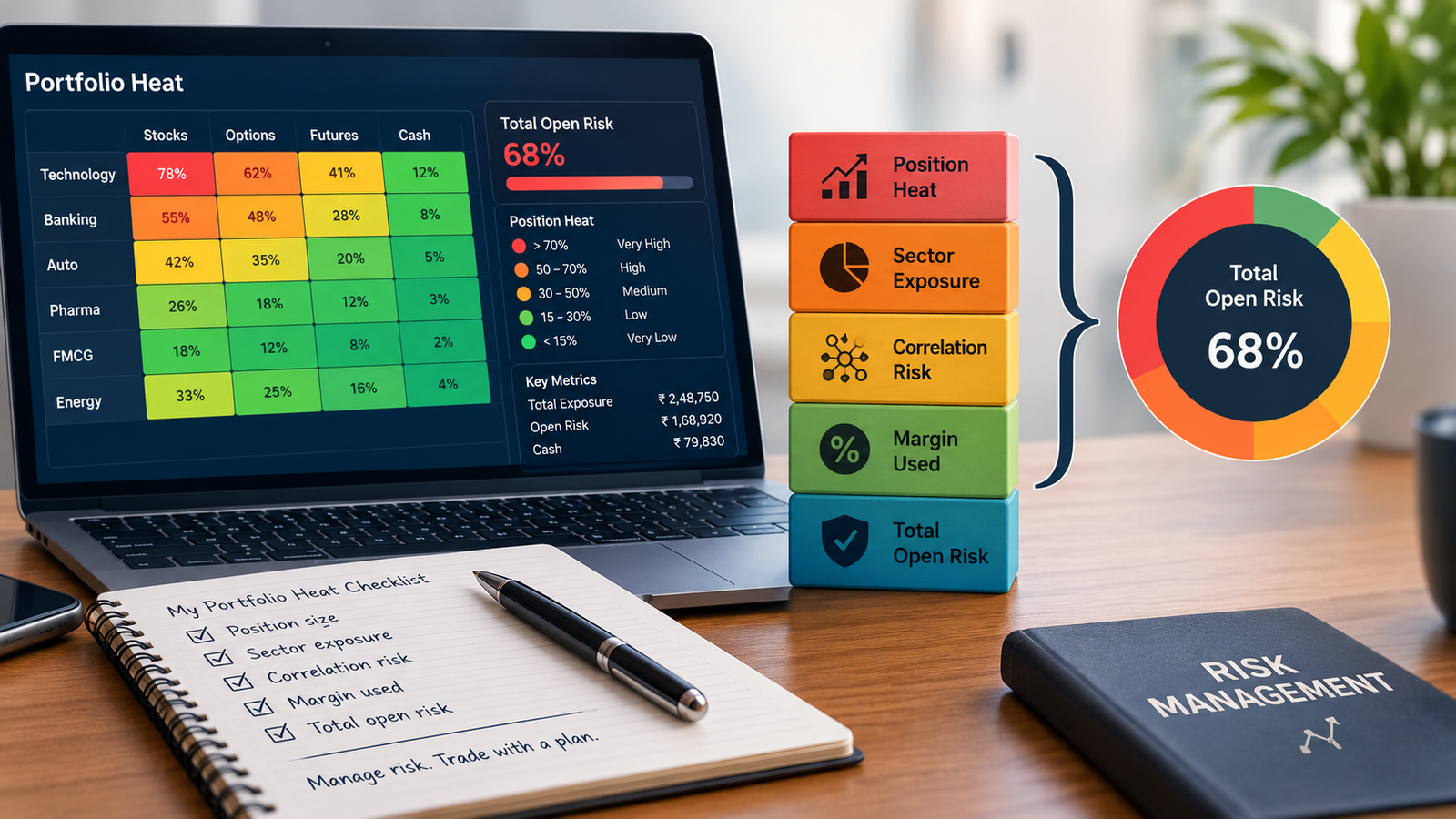
Quick answer: Portfolio heat in trading is the combined amount a trader plans to lose if all open positions reach their recorded exits, expressed in rupees or as a percentage of current account equity. It is a planning measure, not a guaranteed maximum loss. Calculate projected heat and review cluster and stress exposure before adding … Read more

Why Traders Move Their Stop-Loss: How to Stop Turning a Planned Loss into a Bigger One

stop loss

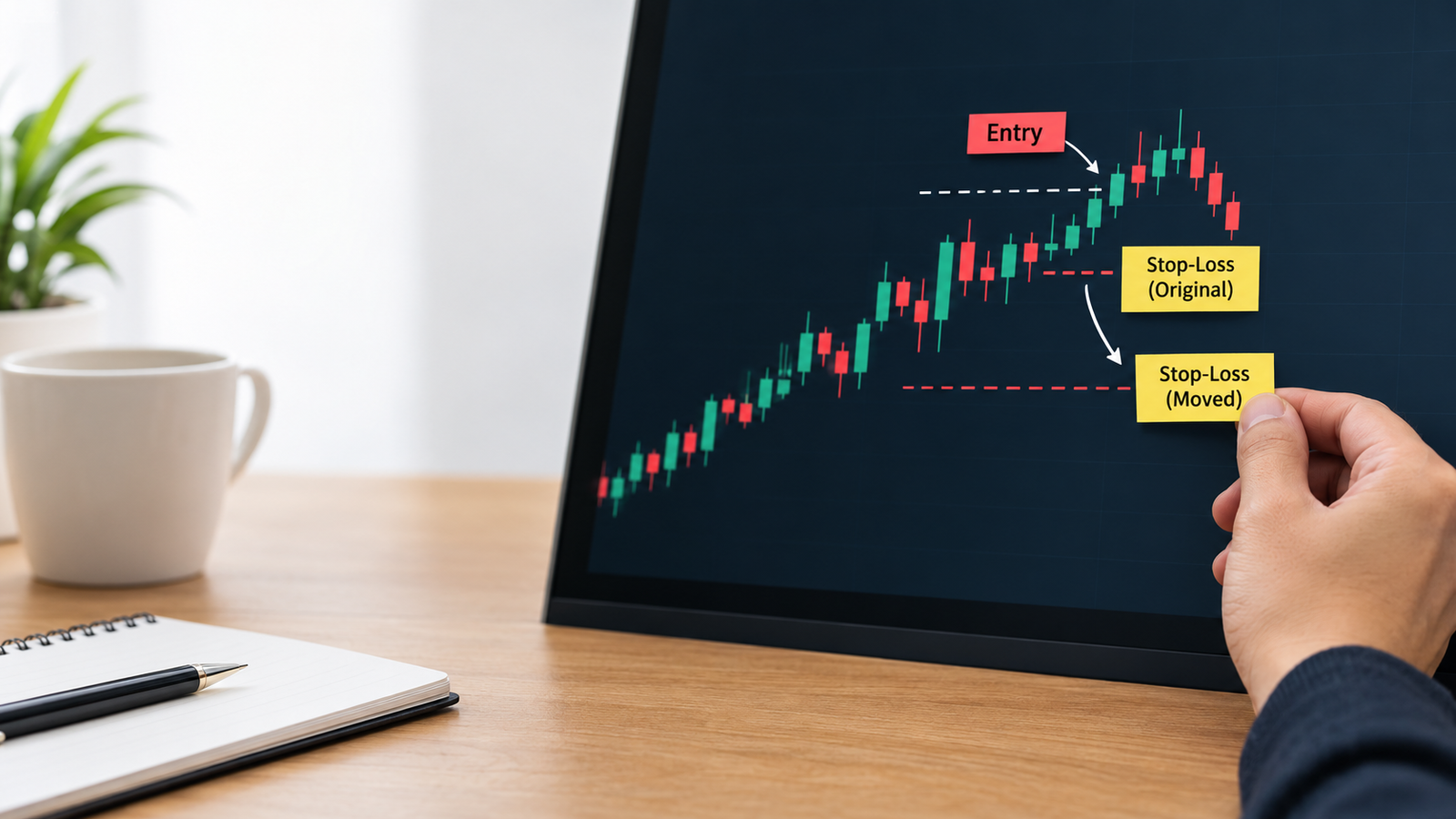
Traders often move a stop-loss farther away because closing the trade converts an uncertain loss into a realised one. Widening the stop without reducing quantity increases the planned rupee risk and changes the original trade. To stop doing it, define the invalidation level before entry, size the position from that level, place the order, and … Read more

Five Stocks, One Bet: How Correlated Positions Create Hidden Trading Risk

correlation risk in trading

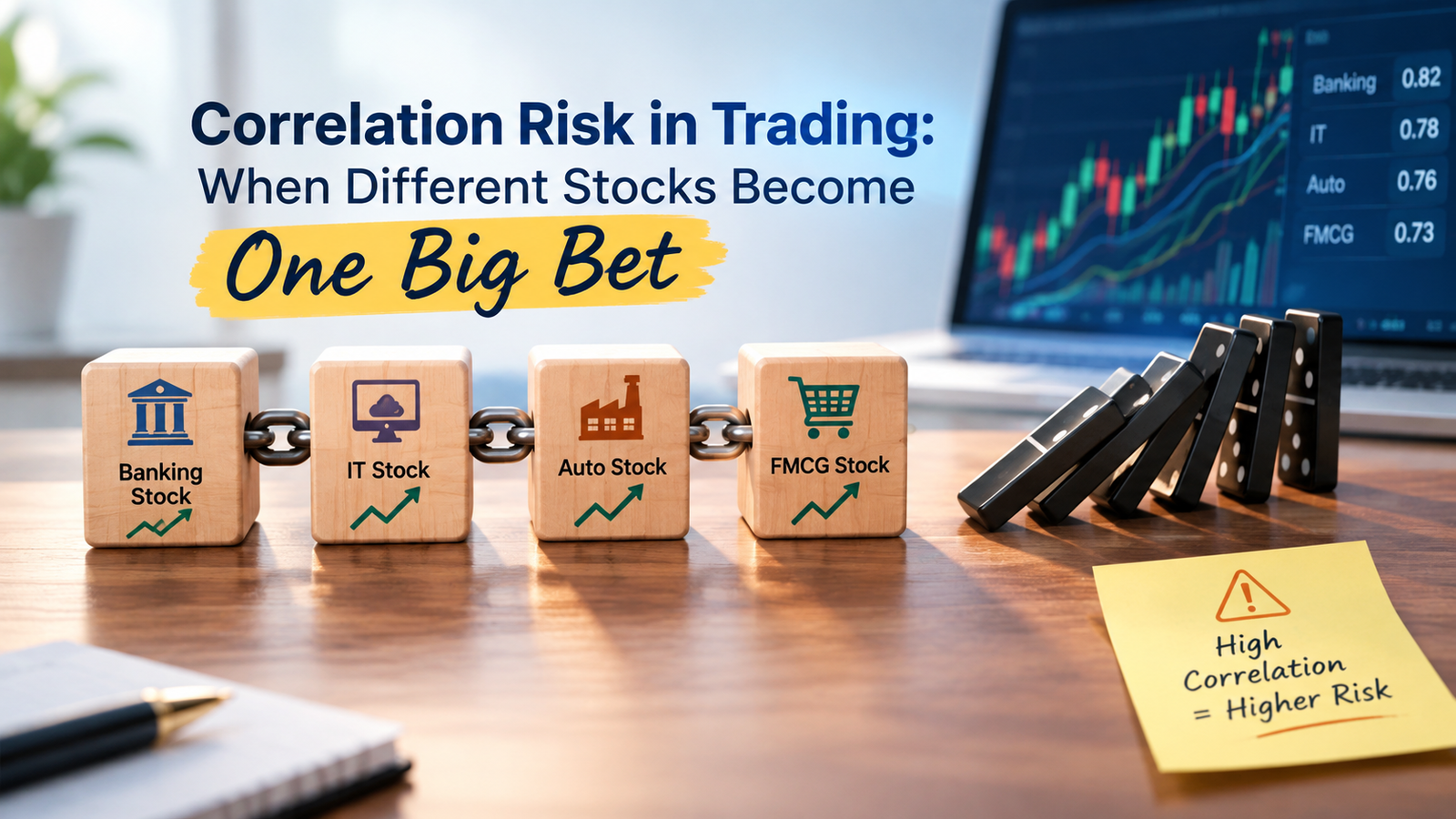
Owning or trading five stocks can feel diversified. But if all five respond to the same market move, sector news, interest-rate expectation, commodity price or institutional flow, the portfolio may behave like one oversized trade. That hidden overlap is correlation risk in trading. It becomes especially important when several positions are long in the same … Read more

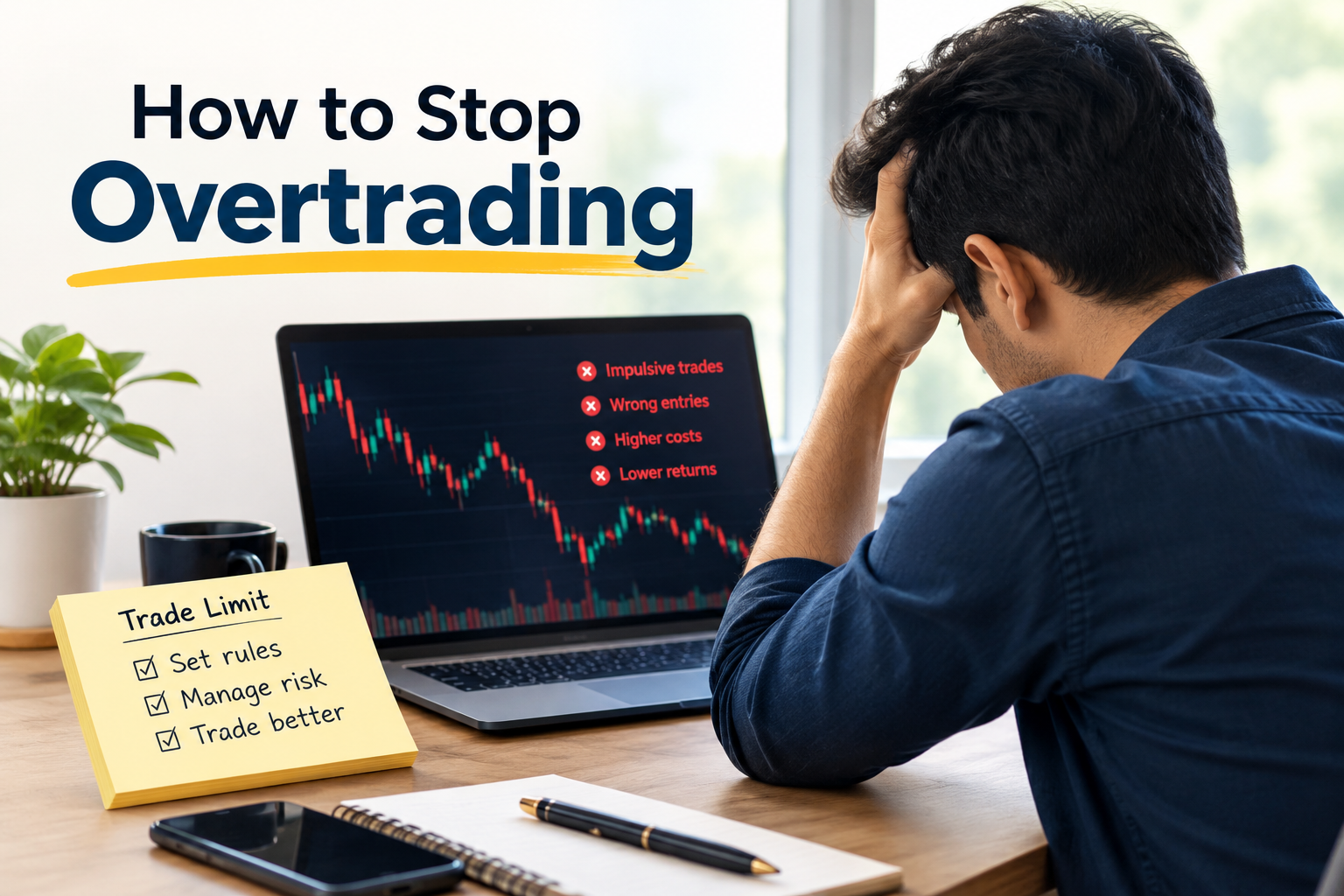
How to Stop Overtrading: Signs, Hidden Costs and a Practical Trade-Limit System

overtrading

Quick answer Overtrading is not defined by a universal number of trades. It occurs when trade frequency, position size or repeated entries exceed the rules and opportunities supported by your plan. To stop it, define valid setups, cap daily risk and trade count, use a post-loss cooldown, and review the cost of all rule-breaking trades … Read more

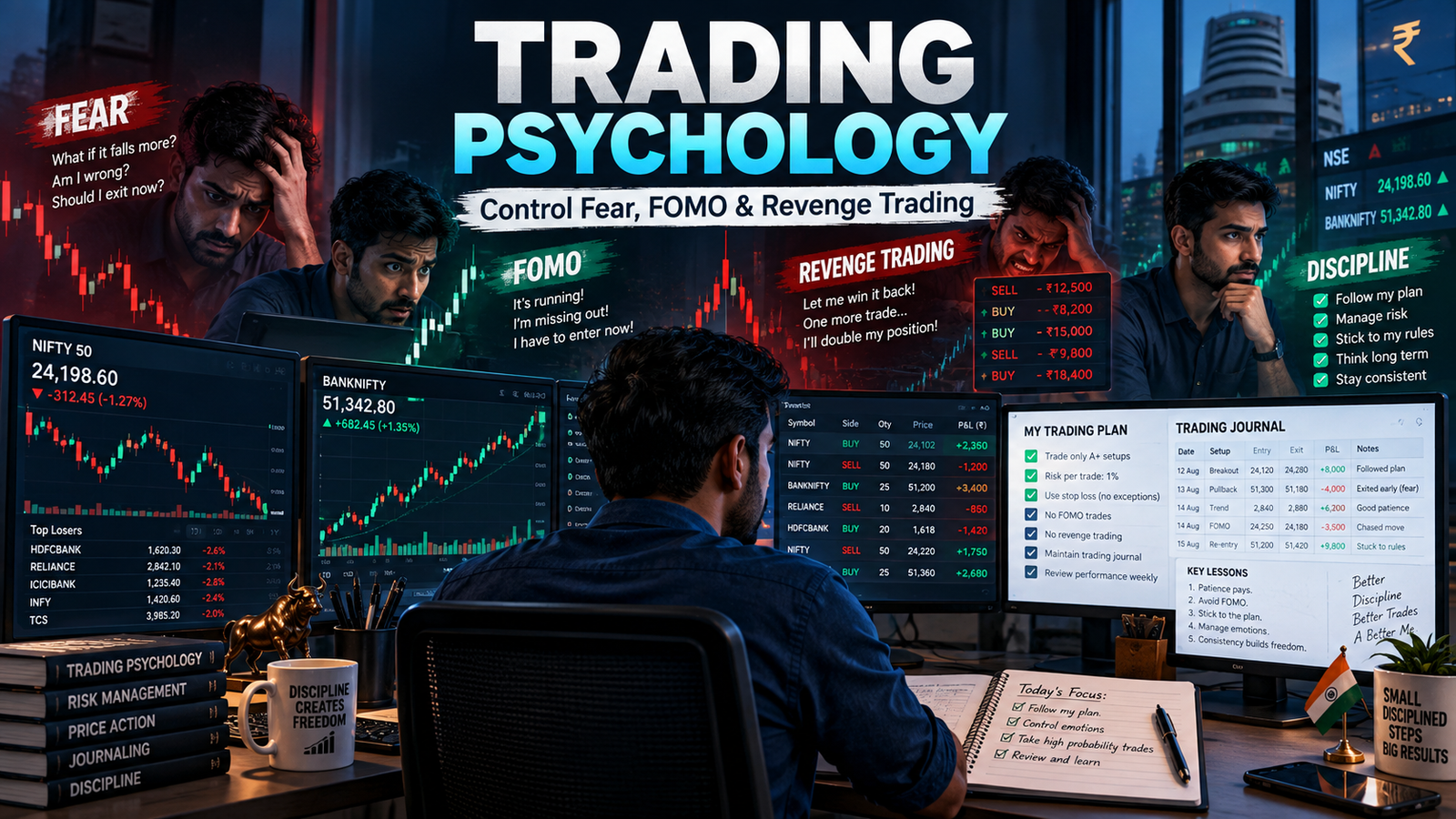
Trading Psychology for Indian Traders: A Practical System to Control Fear, FOMO and Revenge Trading

Trading Psychology

Direct answer Trading psychology is the way your emotions, habits and cognitive biases influence decisions before, during and after a trade. It does not replace a tested strategy. Its practical purpose is to help you follow your entry, risk, exit and review rules when fear, FOMO, overconfidence or the urge to recover a loss makes … Read more

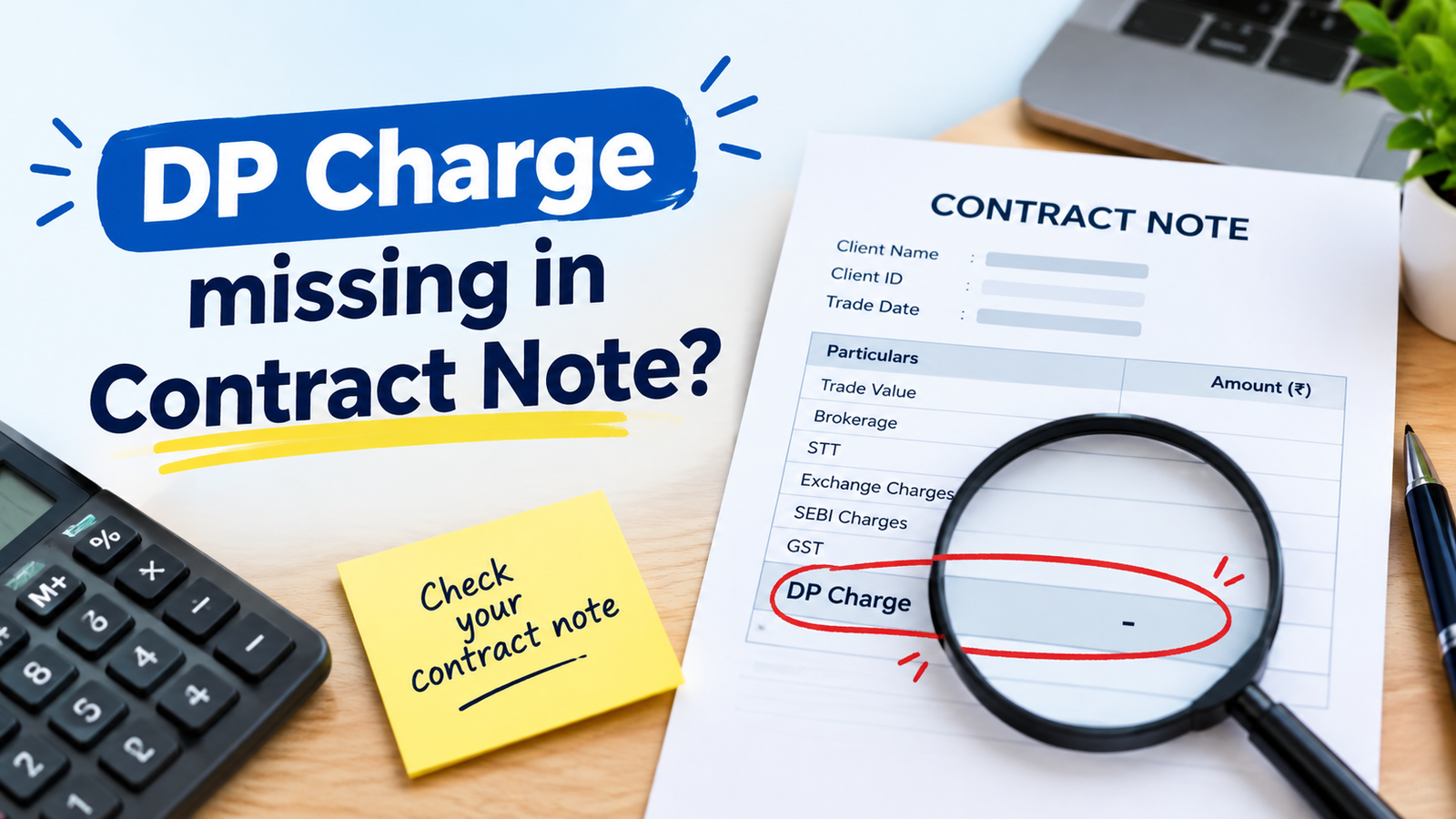
Why Is My DP Charge Missing From the Contract Note but Showing in the Funds Ledger?

DP Charge

You sell shares, open the contract note, and check every line: brokerage, STT, exchange charges, GST and stamp duty. The sale went through. The charges are there. Yet the DP charge you expected is nowhere on the document. That does not automatically mean the broker missed it. In most cases, the answer is simpler: a … Read more