
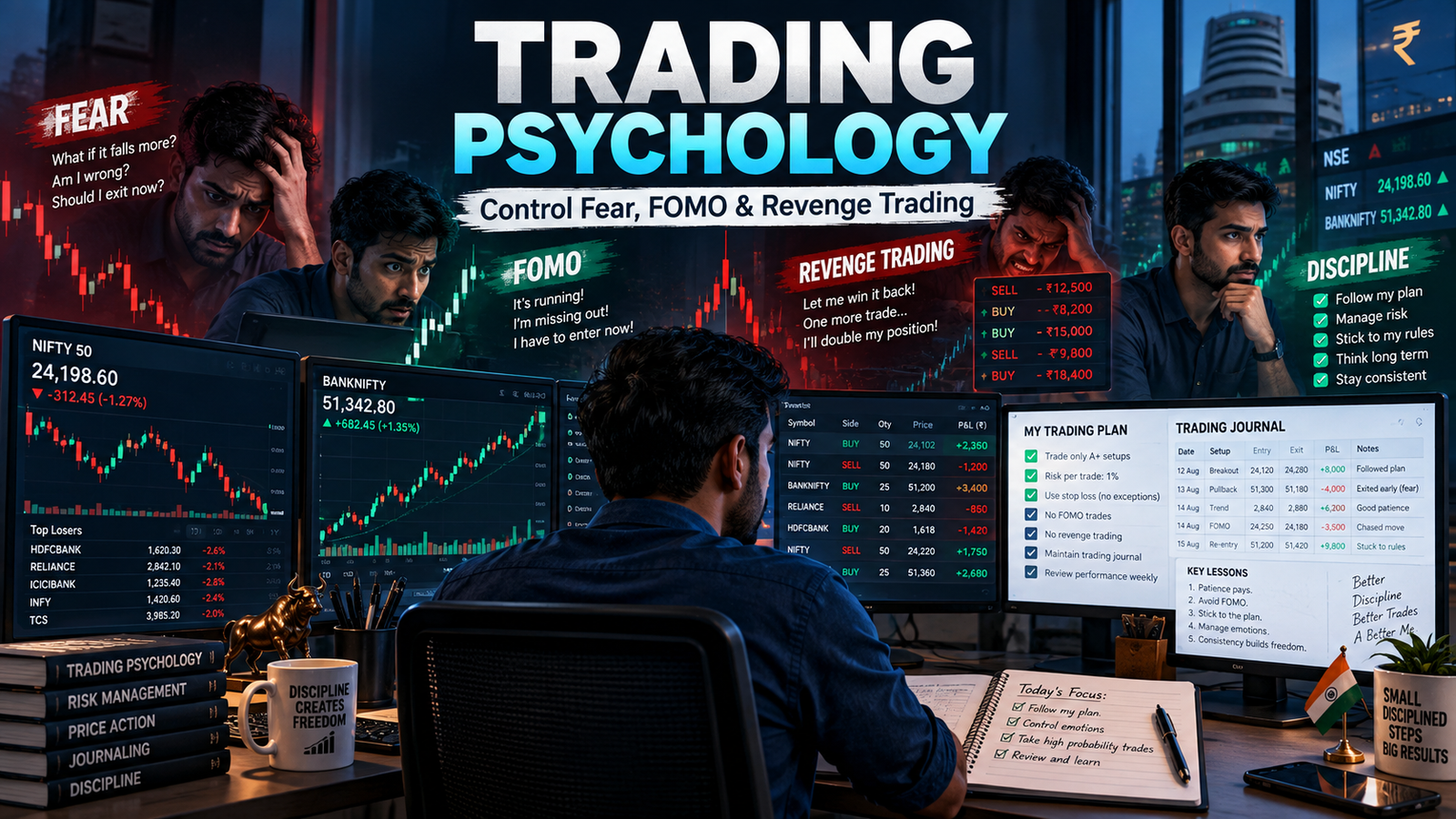
Trading psychology is the way your emotions, habits and cognitive biases influence decisions before, during and after a trade. It does not replace a tested strategy. Its practical purpose is to help you follow your entry, risk, exit and review rules when fear, FOMO, overconfidence or the urge to recover a loss makes those rules difficult to follow.
A trader can understand chart patterns and still enter late, increase quantity after a winning streak, move a stop-loss or take an unplanned trade after a loss. These are execution problems. They often appear when the outcome of one trade starts to feel more important than the trading process.
During more than five years of participating in the stock market, I have found that emotional control is easiest to assess through visible behavior. Instead of asking whether I felt disciplined, I review whether I followed my planned entry, position size, stop and exit. That distinction turns psychology from a vague mindset topic into something that can be recorded and improved.
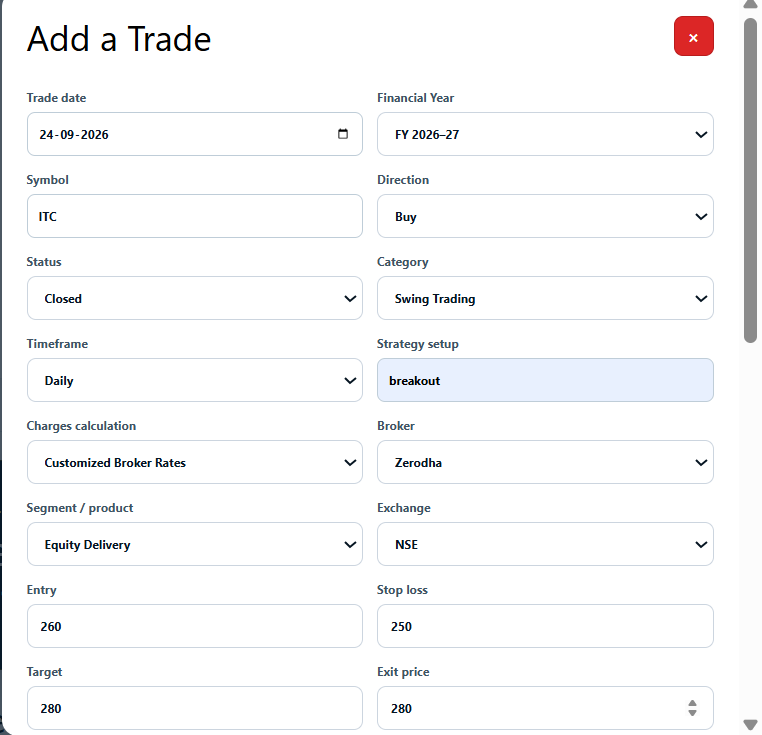
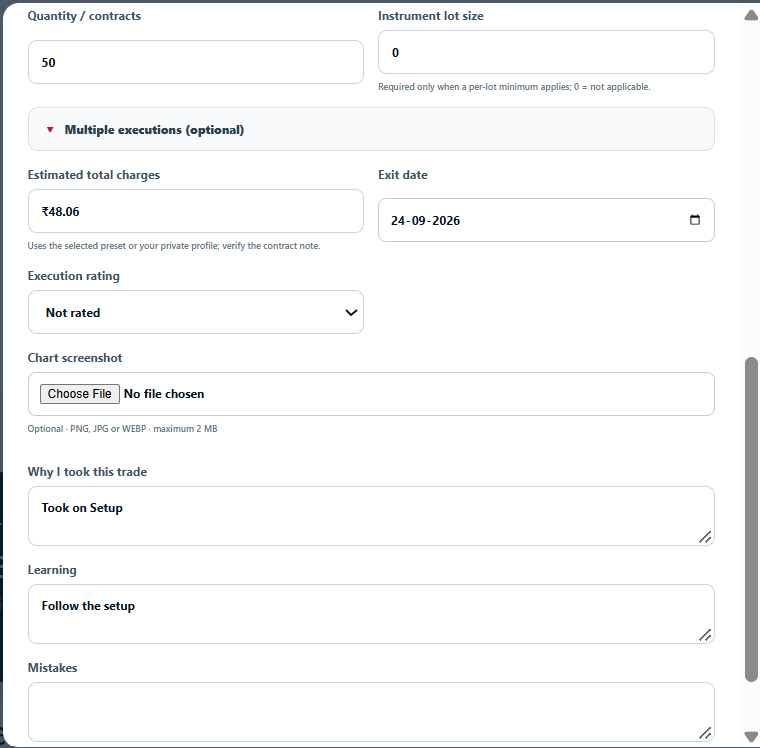
Table of Contents
What trading psychology means
A trader can understand chart patterns and still enter late, increase quantity after a winning streak, move a stop-loss or take an unplanned tra
Trading psychology describes the thoughts, emotions and behavioral patterns that influence how a trader interprets risk and acts on a trading plan. It includes fear of loss, fear of missing out, overconfidence, regret, loss aversion and the desire to recover money quickly.
The useful question is not whether emotion exists. It is whether emotion changes a decision that was supposed to follow a predefined rule. A trader may feel nervous and still execute correctly. Another trader may feel calm while taking a trade that was never part of the plan. Behaviour, not mood alone, determines whether the process was followed after a loss. These are execution problems. They often appear when the outcome of one trade starts to feel more important than the trading process.
During more than five years of participating in the stock market, I have found that emotional control is easiest to assess through visible behaviour. Instead of asking whether I felt disciplined, I review whether I followed my planned entry, position size, stop and exit. That distinction turns psychology from a vague mindset topic into something that can be recorded and improved.
Also Read: Positional Trading
Also Read: Commodity Trading
Why emotions affect trading decisions
Financial risk can produce a physical as well as a mental response. A clinical study by Andrew Lo, Dmitry Repin and Brett Steenbarger observed physiological reactions in professional traders during live market events. The study was small and does not prove that every emotional response causes a bad trade, but it supports a practical point: experience does not remove emotion from decision-making.
Behavioral-finance research also documents recurring patterns. The disposition effect describes the tendency to realise gains while continuing to hold losing positions. Research by Terrance Odean examined investor trading records and found evidence consistent with investors being reluctant to realize losses. Other research links overconfidence with higher trading activity and poorer net outcomes in the studied samples.
Indian traders should also keep the base rate in view. SEBI reported that 93% of individual equity F&O traders incurred losses over FY22 to FY24. That statistic does not show that psychology caused those losses. Costs, leverage, strategy quality, market conditions and execution all matter. It does show why claims of easy or guaranteed trading success deserve caution.
Good trading psychology means following a predefined decision process despite uncertainty. It can be measured through rule adherence: whether the trader used a valid setup, calculated position size, respected the stop, avoided unplanned entries and recorded the result. Calmness can help, but calmness without a valid process is not discipline.
Also Read: Top & Bottom Signal
Psychology cannot repair a weak strategy
Discipline can help a trader execute a tested plan consistently, but it cannot turn negative expectancy into positive expectancy. If average wins, average losses, win rate and costs produce a negative result, perfect rule-following will reproduce that negative result more consistently. Strategy testing and behavioral control must therefore be reviewed separately.
Also Read: Trendline
Trading psychology can improve consistency of execution, but it cannot guarantee profit or rescue a strategy with negative expectancy. First test whether the method has produced a positive result across a meaningful sample after costs. Then measure whether your actual trades followed the tested rules.
Also Read: Futures Trading
The most common psychological traps
Fear
Fear often appears as hesitation before a valid entry, an early exit after a small move against the position or avoidance after a losing streak. Fear may also be useful information: the position might genuinely be too large, the setup might be unclear or the trader might not have accepted the possible loss.
Before trying to become more confident, reduce the decision to measurable questions. Is the setup valid? Where is the trade invalidated? What is the intended rupee risk? Can that loss be accepted without moving the stop? If the answer to the last question is no, reduce the quantity or skip the trade.
Also Read: Intraday Trading
FOMO
Also Read: Trend Reversal
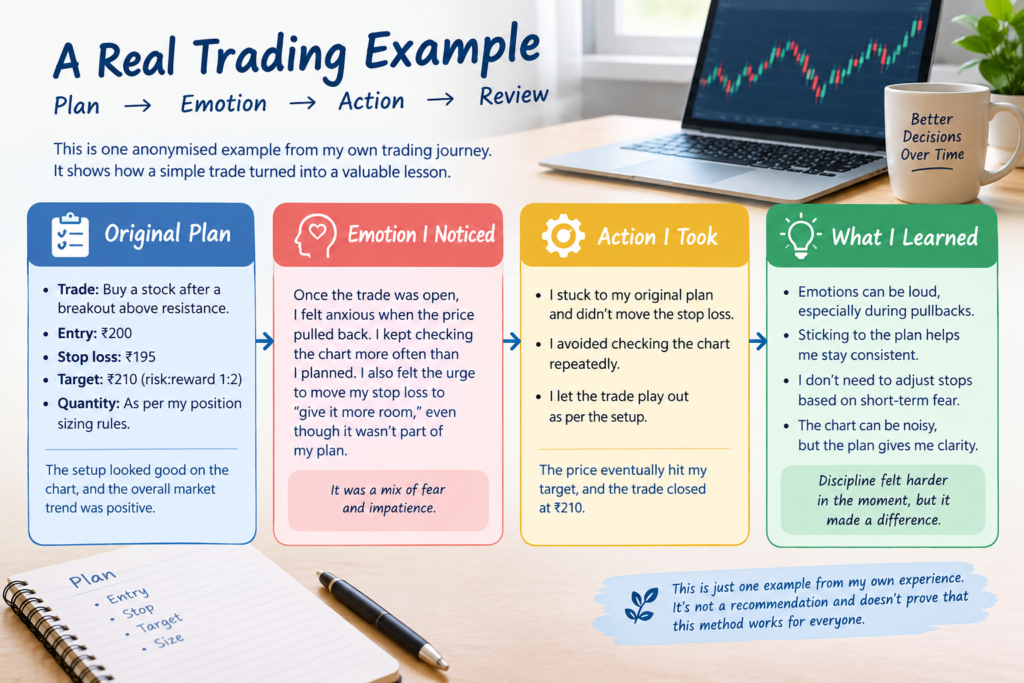
If price moves beyond my planned entry zone before I enter, then I will not chase it. I will record the missed setup, wait for a new valid entry and calculate risk again. Missing a trade has no direct account cost; entering without a valid plan can create one.
Also Read: Double Top
Greed and overconfidence
A winning streak can make normal risk feel unnecessarily cautious. Warning signs include increasing quantity without a rule, taking lower-quality setups, adding to a position because the last trade worked or treating a recent result as proof of skill. Confidence should come from a documented process and a sufficiently large sample, not from two or three outcomes.
Also Read: Sector Rotation
Revenge trading
Also Read: Bear Market Boom
After a loss that triggers an urge to recover money immediately, pause new orders for a predefined cooling-off period. Record the loss, confirm whether the first trade followed the plan and take another trade only if it independently meets the normal checklist. A recovery target is not a trade setup.
Also Read: Double Bottom
Loss aversion and the disposition effect
A trader may take a small profit quickly to avoid losing it, then hold a losing trade because closing it makes the loss feel final. This changes the original payoff structure: winners become smaller while losses are allowed to grow. A predefined invalidation level helps separate the decision to exit from the emotional meaning attached to the purchase price.
Also Read: How to Choose The Right Trading Style
A five step trading psychology process
Also Read: How to Choose The Best Timeframe in Trading
| Step | Question | Action |
|---|---|---|
| Pause | Am I reacting to a win, loss or fast price move? | Wait before opening the order window. |
| Check | Does this trade match a written setup? | Name the setup and invalidation level. |
| Size | What is the intended rupee risk? | Calculate quantity from risk and stop distance. |
| Execute | What would make me alter the plan? | Place only the planned order and avoid discretionary size changes. |
| Review | Did I follow the process? | Score rule adherence separately from profit or loss. |
Also Read: Short Selling Mistakes
A pre trade psychology checklist
Complete this checklist before every discretionary trade. A yes or no answer is more useful than a motivational statement.
- ☐ I can name the setup in one sentence.
- ☐ My entry zone is still valid; I am not chasing price.
- ☐ I know the price that invalidates the trade.
- ☐ I calculated quantity from the stop distance and intended rupee risk.
- ☐ I checked risk already open in correlated positions.
- ☐ The possible loss is acceptable without moving the stop.
- ☐ This trade is not an attempt to recover an earlier loss.
- ☐ A recent winning streak has not changed my size outside a written rule.
- ☐ I know the conditions for taking profit or exiting early.
- ☐ I will record the trade even if the result is embarrassing.
Also Read: Trading Mistakes
If any item affecting setup validity, stop placement or position size is unanswered, do not place the trade until it is resolved. The checklist is a decision filter, not a ritual. Completing it has value only when an unacceptable answer can stop or resize the trade.