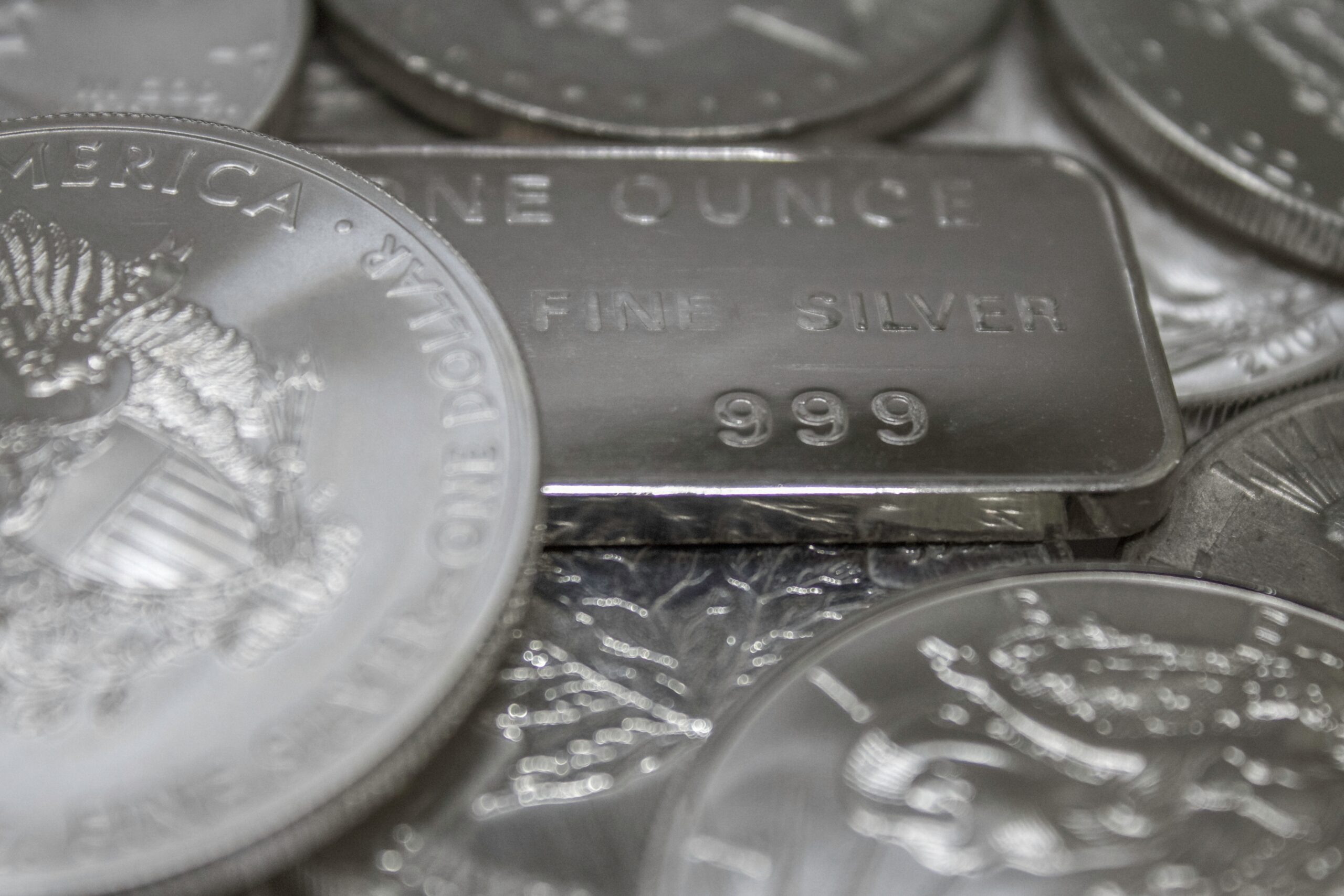
Silver demand has changed dramatically over the last few years. Expanding renewable energy projects, EV manufacturing growth, inflation fears, and rising industrial demand have renewed global attention toward silver.
At the same time, price movement has become more aggressive and difficult to predict. One day silver trades quietly. Then suddenly, momentum surges sharply and traps reactive traders chasing breakouts. Many beginners enter too late, panic during pullbacks, and struggle to understand why silver moves so aggressively.
Today, silver sits at the intersection of industrial growth, investor demand, renewable energy expansion, and global economic uncertainty. This unique mix of industrial and investment demand has increased silver’s importance in global markets
Demand is influenced by both industrial consumption and investor sentiment, which means prices can react differently depending on economic conditions.
Table of Contents
Why Demand Is Rising Right Now (Quick Answer)
The metal is in demand because industrial use, investor demand, inflation concerns, and supply limitations are all strengthening at the same time. Solar panels, electric vehicles, electronics, and precious metal investing continue driving industrial demand higher. Meanwhile, mining production has not expanded fast enough to match rising global demand.
Key Takeaways
- Silver demand is rising because industrial and investment demand are increasing together.
- Solar panels, electric vehicles, electronics, and renewable energy systems require large amounts of silver.
- Inflation concerns and economic uncertainty continue supporting precious metal demand.
- Its supply cannot expand quickly because mining production grows slowly.
- Compared to gold, silver often experiences faster and more volatile price movement.
- Active traders monitor it closely because rapid price movement can create strong momentum opportunities.
10 Reasons Why Silver Is in Demand
1. Demand Is No Longer Driven by One Industry
Historically, most silver demand came from jewelry markets, physical coins, and precious metal investing. Today, the market looks very different.
Now, it supports several industries at the same time:
- Solar energy production
- Electric vehicles
- Medical technology
- Smartphones and electronics
- Battery systems
- Industrial manufacturing
- Precious metal investing
Because demand comes from multiple sectors together, silver now behaves differently from previous market cycles.
For example, when industrial demand slows slightly, investor demand can still support prices. Similarly, when investor sentiment weakens, manufacturing demand may continue rising.
That balance keeps silver highly relevant in modern markets. Demand can come from both retail investors purchasing physical silver and institutional participants gaining exposure through ETFs and futures markets.
Also Read: Pledge
2. Industrial Demand Keeps Rising Worldwide
Industrial demand has become one of the strongest reasons behind its popularity. Analysts estimate that solar-related applications are responsible for an increasingly large portion of worldwide silver demand.
That is why this metal’s superior conductivity still makes full replacement challenging. Because of that, manufacturers continue using it in high-performance technology.
Today, it appears inside:
- Solar panels
- EV charging systems
- Circuit boards
- Medical equipment
- Touchscreen devices
- Telecommunications hardware
Green energy growth has especially increased industrial consumption.
The solar industry relies on silver due to its ability to transfer electricity efficiently. Ongoing expansion of renewable energy infrastructure may continue strengthening long-term silver demand.
Electric vehicles also consume more silver than traditional cars. That trend alone has changed long-term market expectations.
Industry organizations such as the Silver Institute have repeatedly highlighted rising industrial demand in recent years, particularly from solar manufacturing and green energy technology. Some analysts believe long-term industrial consumption could remain one of the strongest structural drivers supporting silver demand over the next decade.
Silver remains difficult to replace in advanced technologies because of its exceptional electrical conductivity and efficiency. Although companies continue searching for ways to lower silver consumption in solar manufacturing, the metal’s superior conductivity still makes full replacement challenging.
Also Read: 11 Crypto Insights
3. Solar Energy Is Changing the Market
The solar industry now consumes massive amounts of the metal every year.
Each solar panel requires silver paste to help move electricity efficiently. Growing worldwide solar installation continues increasing industrial demand for it.
This shift matters because renewable energy demand is not slowing down.
Governments worldwide continue investing heavily in:
- Clean energy projects
- Carbon reduction goals
- Solar infrastructure
- Green technology systems
Some industry analysts expect renewable energy demand to remain one of the largest long-term drivers of silver consumption. As a result, demand receives support from long-term industrial growth instead of only short-term speculation.
Several industry reports have projected record consumption from manufacturing and renewable energy sectors in recent years, particularly from solar manufacturing and electrification trends.
Also Read: Bollinger Band
4. Investors Are Paying More Attention Again
Investor interest has also returned strongly.
When inflation rises or economic uncertainty increases, many investors start moving toward hard assets. The metal often attracts attention because demand comes from both manufacturing activity and investor interest.
Some investors buy precious metals for long-term wealth protection. Others focus on short-term trading opportunities.
You can often notice demand rising during periods of uncertainty. Coin dealers may see stronger buying activity. Meanwhile, online searches for precious metal investing often rise quickly. This trend often signals rising investor concern surrounding inflation, economic uncertainty, and currency depreciation.
Additionally, it often attracts market participants interested in:
- price action strategy
- breakout trading
- smart money trading
- support and resistance trading
- candlestick patterns
Because the market can move aggressively during volatile sessions, many participants closely track liquidity and momentum shifts.
Many experienced traders also monitor the gold-to-silver ratio, which compares how many ounces of silver equal one ounce of gold. Some market participants see extremely high ratio levels as a sign that silver could offer stronger relative value. As a result, the metal often attracts stronger attention during major commodity cycles. On the other hand, during risk-on market conditions, the market may experience faster speculative momentum as traders chase volatility and breakout movement.
Also Read: Golden Crossover
5. Inflation Fear Continues Supporting Precious Metals
Inflation remains one of the biggest reasons investors monitor precious metals closely.
When currency purchasing power weakens, many people look for assets that may hold value better over time.
The metal often becomes attractive because:
- It has physical value
- Supply growth remains limited
- Precious metals historically attract attention during inflation
- Investors seek alternatives to cash-based assets
Uncertainty surrounding interest rates and central bank policy also continues pushing attention toward hard assets.
Silver prices often move inversely to the US dollar because a stronger dollar can reduce demand for dollar-denominated commodities globally. Falling real interest rates frequently increase investor demand for non-yielding assets such as silver and other precious metals.
Also Read: How to Know The Best Strike Price in Options
6. Supply Cannot Expand Quickly
Demand growth alone does not explain the metal’s popularity. Supply limitations also play a major role.
Many assume mining supply adjusts quickly to price changes, but in reality the process is slow and complex.
Much of the world’s silver supply is produced as a secondary output from copper, zinc, and lead mining operations.
Additionally:
- Mining costs continue increasing
- Environmental regulations are stricter
- High-grade silver deposits are harder to find
- New mining projects take years to develop
As a result, supply growth remains relatively slow compared to industrial demand.
Several market forecasts suggest the market could continue facing structural supply deficits if industrial demand keeps growing faster than mining production. Because new mining projects take years to develop, supply cannot always react quickly to rising global consumption.
Recycled silver supply also contributes to the market, but recycling growth has not always been sufficient to offset rising industrial demand.
Also Read: Fibonacci Retracement
7. Physical Demand vs Paper Market Trading
Another interesting part of the precious metals market involves the difference between physical metal ownership and paper trading.
Experienced market participants gain exposure through futures contracts or ETFs instead of holding physical metal. Some of this activity also takes place through large futures exchanges like COMEX, where traders speculate on short-term silver price movement.
Futures contracts allow traders to speculate on silver prices without directly owning physical metal. Paper trading tracks price movement, while physical silver involves actual metal ownership.
In contrast, physical demand sometimes rises faster than paper market expectations.
During periods of heavy buying pressure, dealers may experience:
- Higher premiums
- Inventory shortages
- Delayed delivery times
- Increased retail demand
Meanwhile, futures markets may still show volatile price swings because speculative traders continue reacting emotionally to short-term movement.
That difference sometimes creates confusion for newer investors.
While long-term industrial demand influences prices over time, short-term price movement is often driven by trader behavior, market liquidity, and volatility.
Beyond industrial demand and investing trends, silver also attracts significant attention from active traders.
Also Read: Backtesting
8. Volatility Attracts Active Traders
Silver rarely stays calm for long.
Compared to gold, it often reacts more aggressively during news events, market openings, and high-volume trading sessions.
That behavior is one reason many traders favor silver for:
- momentum trading
- liquidity sweep setups
- market structure shift analysis
- intraday volatility
- breakout confirmation trades
In simple terms, market structure refers to how price forms trends, reversals, higher highs, and lower lows over time.
Some active traders combine precious metals analysis with broader technical strategies, supply-demand zones, and trendline analysis.
Others use multi timeframe analysis to improve trade confirmation before entering fast-moving setups.
For example, some traders first identify the daily trend, then monitor the 4H structure before entering on lower timeframes like 15-minute or 1-hour charts. That process helps traders avoid trading against broader market momentum.
As a result, disciplined execution becomes especially important because rapid price swings can easily trigger impulsive decisions.
Several underlying market dynamics help explain silver’s unique price behavior compared to gold. Many active traders integrate precious metals analysis with technical structure and disciplined risk control.
Also Read: Entry & Exit Points
Why It Moves Faster Than Gold Sometimes
Silver usually has lower market liquidity compared to gold. Consequently, strong buying or selling pressure can create larger price swings in shorter periods.
Gold often moves with smoother structure. Silver tends to accelerate rapidly when buying or selling pressure strengthens.
Gold may react more steadily during economic news, while silver frequently produces faster and larger price swings. That faster behavior is one reason many momentum traders closely monitor volatility.
At the same time, aggressive price swings make poor trade timing far more costly.
Without proper risk reward ratio management, volatility can quickly turn profitable setups into emotional mistakes.
Also Read: Gift Nifty
Rejection Candles and Market Traps
Rejection candles often appear near key levels during high volatility and can signal fake breakouts or liquidity grabs.
Common outcomes include:
Because of this, many traders wait for confirmation instead of entering immediately on breakout candles. A clean retest with volume support is usually considered stronger confirmation than the initial breakout spike.
Also Read: How to Open a New Trading Account
Economic News Often Triggers Explosive Market Moves
Also Read: How to Use Stock Heatmaps
9. Technology Growth Is Increasing Industrial Consumption
Modern technology depends heavily on conductive precious metals.
Although many people think mainly about jewelry or coins, industrial technology now consumes huge amounts of conductive material every year.
The metal is used in:
- Smartphones
- Data centers
- Artificial intelligence hardware
- Semiconductor systems
- Medical sensors
- High-speed communication systems
As technology expands globally, manufacturers continue requiring larger quantities of conductive materials.
The metal remains difficult to replace because of its efficiency and durability.
That helps maintain long-term industrial relevance.
Also Read: Trading Rules
10. Global Uncertainty Also Supports Demand
Financial uncertainty frequently increases investor interest in traditionally defensive assets like precious metals.
During periods of:
During periods of instability, more investors begin monitoring precious metal markets closely.
The metal sometimes benefits from both investment demand and industrial growth at the same time.
What makes silver different from many raw materials is its ability to benefit from both manufacturing demand and safe-haven interest.
Additionally, traders often monitor precious metals during major Federal Reserve meetings, CPI data releases, and interest rate decisions because volatility can increase sharply.
What Could Slow Silver Demand?
Although long-term demand trends remain strong, several factors could temporarily reduce demand or slow price growth.
For example:
- weaker industrial production
- slower global economic growth
- reduced solar manufacturing demand
- higher interest rates
- a stronger US dollar
- reduced manufacturing activity in major economies
- declining investor interest in precious metals
During economic slowdowns, industrial consumption sometimes weakens as manufacturing activity declines. Additionally, rising interest rates can reduce investor demand for precious metals because some investors move capital toward interest-bearing assets instead.
That is one reason prices can remain highly volatile even during long-term bullish cycles.
Like all commodities, silver prices can experience prolonged downturns when investor sentiment weakens or industrial demand slows unexpectedly. Strong industrial and investment demand does not prevent silver from experiencing cyclical slowdowns and volatile corrections.
Also Read: How to Identify High Probability Trades
Should You Buy, Trade, or Watch Silver Right Now?
Your trading approach should match both your financial goals and your comfort level with market volatility. Some traders enjoy fast-moving volatility and active decision-making, while others prefer slower and more stable market conditions.
For many investors, silver serves as a potential hedge against inflation and long-term currency devaluation. Meanwhile, short-term participants typically focus on momentum and price movement opportunities.
If you enjoy cleaner structure and slower movement, gold may feel easier emotionally.
Gold usually moves with steadier structure and smoother trends, while silver tends to react more aggressively during active trading sessions. That is why many beginners start with gold first while learning price action trading and risk management. Later, some traders move toward more volatile commodities once they become more comfortable handling emotional pressure and market volatility.
Neither market is automatically better. The right approach often comes down to how well you handle pressure, maintain patience, and control emotional decision-making during volatile conditions.
In reality, if you understand:
- trading psychology
- risk management
- market structure
- momentum trading
- emotional discipline
Then the metal can provide strong opportunities during active market conditions. The key is not chasing excitement.
Instead, successful traders usually focus on patience, structure, and confirmation.
Long-term investors and short-term traders often approach silver very differently, which explains why market behavior can sometimes appear inconsistent across different timeframes.
Also Read: Trading Consistency
Which Type of Trader Usually Prefers Silver?
The commodity usually attracts traders who are comfortable handling fast volatility and emotional market conditions. Some market participants thrive in fast intraday environments with sharp price swings, while others feel more comfortable trading steadier assets such as gold or major currency pairs.
For example:
- Fast-moving market conditions often attract momentum traders looking for rapid price expansion.
- Swing traders may focus more on larger breakout structures and higher timeframe trends.
- Conservative beginners sometimes avoid silver at first because sudden volatility can feel difficult to manage.
There is no perfect market for everyone. Traders should evaluate their personality and ability to manage volatility before entering precious metals markets.
Also Read: Trading Failure
Common Mistakes Traders Make With Silver
Many beginners are attracted to silver because rapid price movement looks exciting. Over time, volatility can quickly create emotional mistakes if you trade without patience or structure. That is why disciplined execution matters far more than chasing fast profits.
Common mistakes include:
- Chasing oversized candles
- Ignoring higher timeframe direction
- Trading emotionally during volatility
- Entering before confirmation
- Overtrading news events
- Moving stop losses impulsively
- Ignoring trend continuation confirmation
- Revenge trading after losses
- Panic selling during sharp pullbacks
- Overtrading during high volatility
- Becoming overconfident after a few successful trades
Trend continuation simply means allowing the market to confirm that the current directional move still remains intact before opening a position. One frequent trading error involves opening positions before price action properly confirms continuation strength. Patient entries based on confirmation can improve discipline during fast-moving market conditions.
That approach helps protect capital during sudden market volatility. Experienced traders also understand that not every silver move needs to be traded. In many situations, avoiding low-quality market conditions and waiting for clearer confirmation can be more effective than forcing impulsive trades.
New traders frequently react emotionally to oversized momentum candles. Disciplined traders typically wait for confirmation signals and favorable risk conditions before entering positions.
That is why structured execution matters more than emotional decision-making.
Also Read: Market Order & Limit Order
FAQs
Why is silver demand rising right now?
Demand is rising because industrial use, inflation concerns, renewable energy growth, and investor interest continue increasing together.
Why Do Investors Monitor Silver During Inflationary Periods?
Investors often monitor precious metals during inflation because precious metals may hold value better when currency purchasing power weakens.
Why does silver move faster than gold sometimes?
Silver has lower liquidity than gold. This is one reason strong buying or selling activity can trigger sharper price fluctuations.
Does solar energy affect silver prices?
Yes. Solar panels require silver for electrical conductivity. As solar adoption grows globally, industrial silver demand also increases.
Is silver good for beginners?
The market can create profitable setups, though fast volatility often overwhelms newer participants. Many traders first learn risk management and price action before actively trading silver.
Why is silver important in technology?
Silver supports many electronic and industrial systems because it conducts electricity extremely efficiently.
Why is silver used in electric vehicles?
Electric vehicles require silver in battery systems, charging infrastructure, and electronic components because silver conducts electricity extremely efficiently.
Is silver an industrial metal or a precious metal?
Silver is considered both an industrial metal and a precious metal because it has widespread industrial applications while also attracting investor demand during economic uncertainty.
Also Read: How to Open a Demat Account
Final Thoughts
Silver is no longer driven only by jewelry demand or short-term speculation. Today, it sits at the center of industrial growth, renewable energy expansion, investor demand, and global economic uncertainty.
That combination continues attracting attention from both long-term investors and active traders. As technology adoption and renewable energy infrastructure continue expanding, silver may remain one of the most closely watched commodities in global markets for years ahead.
Even with rising demand, silver remains known for aggressive and unpredictable price movement. Near-term price fluctuations are frequently influenced by market momentum, liquidity conditions, trader positioning, and emotional reactions.
For active traders, that volatility can create opportunities. However, without proper risk management and emotional discipline, unstable market conditions can quickly lead to impulsive mistakes.
As electrification, renewable energy infrastructure, and advanced technology manufacturing continue expanding globally, long-term consumption trends may remain structurally supportive for the market.
In the end, silver remains one of the few assets influenced by both industrial expansion and investor sentiment at the same time. Whether viewed as a long-term industrial resource, inflation hedge, or active trading market, its growing role in renewable energy, technology, and global finance continues keeping the silver market in focus worldwide.
Also Read: RSI