
Leverage can turn a small market move into a big profit—or a painful loss within minutes. This explains why so many new traders find it difficult. Your decisions matter more than the tool itself. Using it at the right time is what truly matters.
Applied correctly, it expands your trading opportunities. Used carelessly, it can damage your trading account much faster than expected. Learn it first to make smarter trades with leveraged funds.
This approach allows you to control a larger trading position with a smaller amount of your own capital. Higher return potential also brings greater risk, making Risk Management crucial.
Table of Contents
What Is Leverage?
This feature enables traders to control larger positions using modest personal capital. It increases both potential profits and potential losses, making proper risk management and position sizing essential. It is usually expressed as a ratio, such as 5:1, 10:1, or 20:1. A higher ratio provides greater market exposure but also increases potential risk.
Consider leverage like cycling downhill. The bicycle lets you move faster. Even then, discipline and control remain essential. Without them, speed quickly becomes dangerous.
The same idea applies to trading. It does not improve your trading skills. Instead, it magnifies the outcome of every decision you make.
You will commonly find leverage in:
- Futures
- Commodity Trading
- MCX
- Forex markets
- Certain Options strategies
That is why successful traders first focus on Trading Rules, discipline, and experience before increasing leverage.
Also Read: EGR
Also Read: Gold & Silver Trading
Why Leverage Matters in Trading
Small fluctuations can produce noticeable account changes. Without it, you may need substantial capital to participate in some markets. A modest investment can control a larger position.
For example, you might trade:
- Gold
- Silver
- Crude
- Natural Gas
- Stock index futures
Using much less money than the contract’s total value. Greater exposure increases opportunity, not guaranteed profits. Market fluctuations affect the complete position value. That is why experienced traders often prefer moderate exposure instead of using the maximum available. Many professionals believe consistency matters more than excitement.
Small, controlled gains usually outperform emotional trading over time.
Also Read: ChatGpt vs Google in Trading
How Leverage Works in MCX and Futures
In Futures trading, you usually do not pay the full contract value. Only the initial margin is required to start the trade.
Suppose the contract is worth ₹5,00,000 in the market. A ₹75,000 margin lets you control the entire contract.
As prices move, profits and losses are calculated on the entire contract value, not just your margin. That is why Futures and MCX traders should always control position size and maintain sufficient trading capital.
In Indian Futures and MCX markets, required margins typically include exchange-defined initial margin components and exposure-related margins. These margins are commonly called SPAN and Exposure margins. Margin requirements may increase whenever market volatility rises. As a result, your available buying power can also change even if your trading strategy stays the same.
Also Read: NiftyBees
How Does Leverage Work?
Imagine you have ₹20,000. Your broker offers 10:1 ratio. Instead of controlling only ₹20,000 worth of assets, you can manage a position worth ₹2,00,000.
Now imagine the market rises by 2%. Controlling a larger position can lead to higher returns. Unfortunately, the opposite is equally true.
If prices move against you by the same percentage, losses also grow much faster. This is why it works like a zoom lens. It magnifies every outcome, whether positive or negative.
Before opening any leveraged trade, always ask yourself one simple question:
“Can I comfortably accept this potential loss?” If not, trade a smaller position.
Also Read: Colour Trading Mastery
Why Brokers Provide This Facility
New traders frequently wonder how small capital controls larger positions. The answer is simple.
This feature attracts more traders by reducing the capital required. At the same time, brokers protect themselves through margin requirements, risk controls, and automatic position closures when losses become too large.
Never mistake it for free money. It is a trading mechanism with responsibilities for both traders and brokers.
Also Read: Gift Nifty
Margin vs Exposure: What's the Difference?
| Term | Meaning |
|---|---|
| Margin | The money you deposit to open a trade. |
| Used Margin | The amount of your funds locked in open trades. |
| Free Margin | The money still available to open new trades or absorb losses. |
| Maintenance Margin | The minimum account balance required to keep your trades open. |
| Leverage | The buying power provided by your broker. |
| Position Value (Market Exposure) | The total value of the market position you control using margin. |
A ₹20,000 margin at 10:1 leverage provides ₹2,00,000 of market exposure.
Also Read: Triangle Chart Pattern
How to Use Leverage Without Taking Unnecessary Risk
This tool works best when it supports your trading plan instead of replacing it. New Traders expand their positions before managing their risk. Experienced traders do the opposite.
Before opening any position, ask yourself:
If you cannot answer these questions clearly, consider waiting for a better opportunity.
Also Read: Trading Account Setup
What Happens During a Margin Call?
Your trading platform may request additional funds if your balance falls too low. Should this happen, you may need to add extra funds. If you do not, some or all positions may close automatically.
Imagine opening a large trade with substantial buying power. Then the market suddenly moves against you. Your available balance keeps falling. Eventually, the trading platform may close positions to reduce losses.
Although a margin call feels stressful, it reminds you why position sizing matters. Better Risk Management makes that outcome less likely.
Also Read: Pledge
Also Read: Chart Pattern
Why Position Size Matters Most
Many beginners focus on leverage first. Professional traders focus on position size.
Imagine two traders both use 10:1 leverage. The first risks only 1% of the account. The second risks 20%. Both use the same leverage.
However, the second trader faces much greater danger because the position is too large. Always decide your maximum acceptable loss first. Then calculate your position size. Only after that should you think about your exposure.
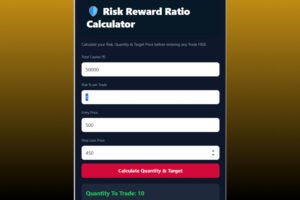
Let your stop-loss define your position size, then let position size limit your buying power.
By itself, this tool does not create risk. Oversized positions and poor risk management do.
Also Read: Momentum
Selecting Suitable Buying Power for Your Trading Style
| Low Leverage | High Leverage |
|---|---|
| Smaller potential gains | Larger potential gains |
| Smaller potential losses | Larger potential losses |
| More room for normal market fluctuations | Less room before losses increase |
| Lower emotional pressure | Higher emotional pressure |
| Better suited to beginners | Better suited to experienced traders |
There is no perfect ratio for everyone. The right choice depends on your experience, market conditions, and strategy.
Also Read: How to Use TradingView
How Much Should Beginners Use?
| Trading Style | Suggested Approach |
|---|---|
| Intraday Trading | Use moderate leverage with strict stop-losses. |
| Positional Trading | Lower leverage often suits longer holding periods. |
| Futures and Options | Keep position sizes under control because volatility can increase quickly. |
| Commodity Trading | Adjust leverage based on the contract’s daily price movement. |
Markets behave differently every day. Energy and metal markets may experience sharp volatility after major news. During volatile periods, smaller positions can safeguard your money and mindset.
Also Read: Morning Star & Evening Star
Also Read: MTF
How Different Markets Use Initial Capital and Trade Size
Different markets behave differently. That is why one margin approach never suits every asset.
| Market | General Approach |
|---|---|
| Forex | Moderate to higher leverage because of high liquidity. |
| Futures | Use moderate leverage with strict position sizing. |
| MCX Commodities | Use conservative leverage during volatile sessions. |
| Stocks | Lower leverage usually works better. |
| Crypto | Use extra caution because prices can move rapidly. |
Adjust your market commitment as conditions change.
Also Read: Candlestick Trading
Common Trading Mistakes You Can Easily Avoid
Poor trading habits create many unnecessary losses.
Watch out for these common mistakes:
- Using the maximum leverage available.
- Ignoring your stop-loss.
- Increasing position size after a losing trade.
- Jumping into every Breakout without supporting evidence.
- Blindly following market advice instead of research.
- Trading emotionally after a winning streak.
- Forgetting to review previous trades.
- Averaging down without a clear trading plan.
- Keeping oversized trades open overnight without recognizing the added danger.
These mistakes often appear together with Trading Fear, Greed, FOMO, Revenge Trading, Overconfidence after Winning trades, and Poor Trading Psychology. Better consistency may come from avoiding them.
Also Read: 10 Trading Mistakes
Why Professionals Often Keep Position Sizes Smaller
Many beginners believe experienced traders always use the highest ratios. The opposite is usually true. Professional traders protect their capital first. They know another opportunity will always come. They focus on Trading Consistency by keeping positions smaller. Steady market participation beats one successful trade.
Also Read: Golden Crossover
A Trading Plan Makes Leverage More Effective
Leverage should never become your strategy. Instead, combine it with proven trading habits.
For example:
- Gain confidence in Price Action Trading before increasing exposure.
- Verify trading signals with a Trendline, RSI, or Bollinger Band.
- Look for Confluence instead of relying on one signal.
- Learn with Paper Trading before entering live markets.
- Test your ideas with Backtesting and Forward Testing.
- Maintain a favorable Risk to Reward Ratio.
Strong traders focus on process first. Profits usually follow disciplined decisions. Leverage makes each decision carry greater significance. That is why professionals often say protecting your account is more important than chasing quick returns.
Another trading opportunity will always come along. Rebuilding lost capital is much harder.
Also Read: Heikin Ashi Candle
When Should You Avoid Leverage?
Leverage is not suitable for every situation. Sometimes, using less leverage is the smarter decision.
Consider reducing or avoiding extra exposure when:
- Major economic news is approaching.
- Markets become unusually volatile.
- Liquidity suddenly drops.
- You feel emotional or distracted.
- You have not tested your strategy.
Overnight price gaps can move beyond your planned stop-loss, causing larger losses than expected on highly leveraged positions.
For example, Sensex and Nifty, MCX, or commodity markets can react sharply to unexpected events. A small price move may quickly become a large account swing when leverage is high.
Patience often protects your capital better than aggressive trading.
Also Read: Fibonacci Retracement
Also Read: Circuit Limit
Extra Situations Where Smaller Positions Make Sense
Consider reducing leverage before:
- RBI policy announcements
- Union Budget day
- Election results
- Major global central bank decisions
- Unexpected geopolitical events
- Very low-liquidity trading sessions
These events can create sudden price swings that increase trading risk, even when your analysis is correct.
Many brokers also reduce available buying power before major events such as RBI announcements, the Union Budget, elections, or unexpected global news.
They do this because sudden price swings increase trading risk for both traders and brokers. If your broker changes margin requirements during these periods, adjust your position size instead of forcing the same trade.
Also Read: Sector Rotation
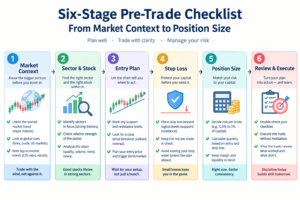
A Simple Pre-Trade Checklist
Spend a minute reviewing any trade involving additional buying power.
Ask yourself:
- Does this trade match my plan?
- Have I fixed my exit risk before entering?
- Is my stop-loss already planned?
- Have I restricted my risk to a small share of my account?
- Does this entry provide a worthwhile Risk to Reward Ratio?
- Have I checked today’s market volatility?
- Am I following reason rather than feelings?
If you answer “No” to any question, consider waiting. The market will always provide another opportunity.
Also Read: ETFs
A Quick Decision Tree
Are you new to trading?
↓
Yes
↓
Use lower leverage.
↓
Practice through Paper Trading.
↓
Build confidence.
↓
increase your exposure only after consistent results.
Already profitable?
↓
Continue using only the leverage your strategy actually requires.
↓
Do not increase leverage simply because your account has grown.
Also Read: Smart Money Concept
How Drawdowns Become Harder to Recover
Large losses become much harder to recover.
| Loss | Gain Needed to Recover |
|---|---|
| 10% | 11% |
| 20% | 25% |
| 30% | 43% |
| 50% | 100% |
This is why protecting your capital is usually more important than maximizing returns.
Minor capital setbacks are easier to recover from than major setbacks. Significant drawdowns reduce trading capital, making future percentage returns harder to achieve.
Also Read: Nifty Expiry
The Hidden Cost of Overleveraging
It occurs when your trade size exceeds your account capacity. Even a normal market movement can then create a large loss. Many beginners assume they need more leverage to make more money.
In reality, they often need better discipline, stronger Risk Management, and more patience. Using moderate leverage usually leads to steadier decision-making and better long-term results.
Also Read: Stock Heatmaps
Also Read: Trading Failure
Common Myths
Many beginners misunderstand leverage. Let’s clear up a few common myths.
| Myth | Reality |
|---|---|
| Higher leverage guarantees higher profits. | Higher leverage increases both potential gains and potential losses. |
| Professional traders always use maximum leverage. | Most experienced traders manage their exposure carefully. |
| Leverage replaces a good strategy. | Even with leverage, a poor strategy is likely to lose money. |
| More buying power means lower risk. | Larger positions usually increase overall market exposure and risk. |
Understanding these differences can help you make better decisions and avoid unnecessary Trading Mistakes.
Also Read: How to Identify False Breakout
How to Make Leverage Work for You
Managing borrowed money requires experience, control, and thoughtful decisions. It gives you greater market exposure while requiring less upfront capital. However, that advantage only works when combined with discipline, planning, and patience. Whether you trade MCX, Commodity Trading, Futures, or other markets, your first priority should always be protecting your capital. Prioritize long-term progress instead of rapid rewards. Build strong habits through Trading Consistency, maintain a detailed Trading Journal, and keep refining your skills with Price Action Trading, Trading Psychology, and sound Risk Management.
Over time, those habits can become far more valuable than using higher leverage.
Also Read: Market Order & Limit Order
Also Read: Demand & Supply
Frequently Asked Questions
Is Leverage Good for Beginners?
Leverage can help beginners, but lower levels are usually safer. Build position sizing skills before increasing market participation.
Do Bigger Positions Always Mean Bigger Profits?
No. It increases both potential gains and potential losses. The outcome depends on your trading decisions.
Can I Lose More Than My Initial Margin?
It can, depending on the market, your broker’s policies, and how quickly prices move. In some markets, negative balance protection may apply, while in others you may owe additional funds.
Can I trade on MCX Without High Exposure?
Yes. Many traders prefer moderate exposure to reduce large account fluctuations during volatile sessions.
What is the Biggest Mistake Traders Make with Leverage?
Many traders open positions that are too large for their account size. Proper position sizing and disciplined Risk Management help prevent this mistake.
Also Read: Order Block Trading
A Real Trading Example
Imagine two traders each have ₹50,000. Trader A uses very high leverage on one trade. Trader B trades with modest borrowed capital, follows a stop-loss, and limits account risk. After several months, Trader A experiences a few large losses and struggles to recover. Trader B grows more slowly but protects capital during difficult periods.
That steady approach often creates better long-term results because surviving in the market matters more than winning one oversized trade.
Also Read: Trading Taxes
Final Thoughts
Leverage should support your trading—not control it. Sustainable trading growth relies on discipline, sound judgment, and consistent action. Use leverage as one part of a well-planned strategy, protect your capital first, and let experience guide your confidence. As time passes, this method improves your odds of achieving lasting results. In trading, staying in the game is often more valuable than making one spectacular trade.
Also Read: Volume